
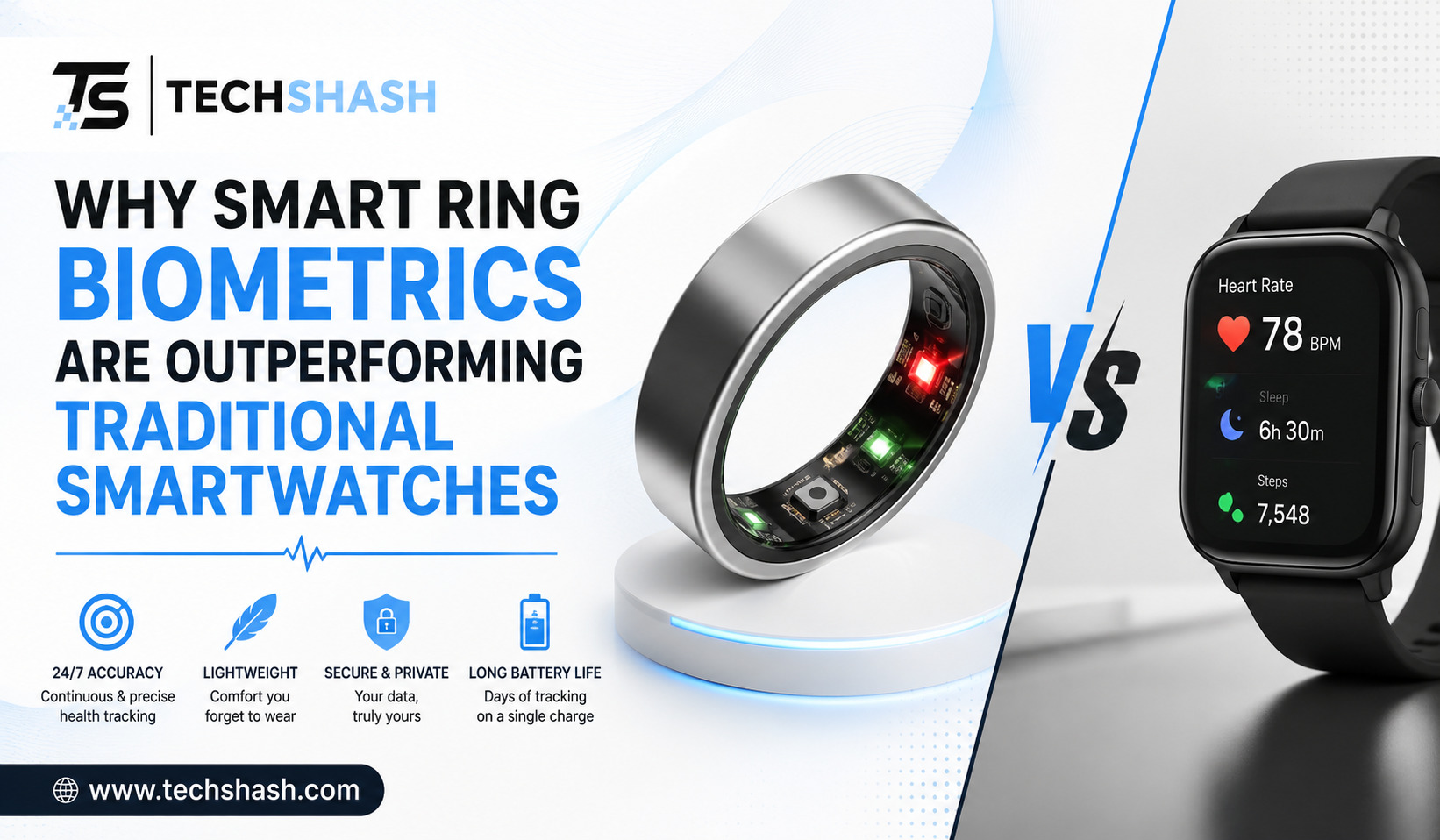
Many people rely on wearable devices to monitor their heart rate, daily sleep quality, and fitness activity. While wrist devices have been popular for years, smart ring biometrics are now emerging as a far more accurate solution for personal health tracking.
Finger-based measurements offer distinct physical benefits over wrist-based sensors. In this article, we will examine why compact ring sensors deliver superior accuracy, better continuous data, and enhanced comfort compared to traditional smartwatches.
1. How Smart Ring Biometrics Outperform Wrist Sensors Through Finger Arteries
The human finger contains major blood vessels that sit very close to the surface of the skin. This physiological layout allows light sensors to read pulse signals with great clarity.
Wrist sensors must shine light through thick tissue, bone, tendon, and hair. Because the wrist has a lower density of superficial blood vessels, the signal collected by a watch is often faint.
Optical Pulse Sensing at the Finger
Light sensors in rings use photoplethysmography to detect blood flow changes with each heartbeat. The digital arteries in your fingers are large and clear.
Because these arteries sit just beneath the upper skin layer, finger pulse signal clarity is significantly higher than signals gathered from the top of the wrist. This allows sensors to capture precise heart rate readings with minimal effort.
Deeper Signal Extraction
Smart ring biometrics measure arterial pulse waves rather than capillary blood flow. Capillaries on top of the wrist pulse with less force and can yield unstable readings.
Directly measuring arterial flow provides a much stronger blood volume pulse. This strong signal leads to precise calculations for heart rate variability and blood oxygen saturation.
- Digital arteries run down both sides of every finger, right under the skin surface.
- The top of the wrist contains dense bone structures that block optical light.
- Fatty tissue on the wrist can absorb sensor light and weaken the signal strength.
- Rings position their light sensors directly over primary blood paths for max clarity.
2. Superior Skin Contact and Reduced Motion Artifacts in Daily Use
A major problem with wrist-worn devices is movement during physical activity. When you swing your arm, the watch shifts across your skin.
This movement creates empty space between the optical light and your body. The resulting gap allows ambient room light to enter the sensor, which corrupts the data.
Snug Fit without Tight Straps
A ring fits around the circumference of your finger in a fixed position. It does not slide back and forth like a heavy watch casing.
Because a ring maintains consistent sensor contact, ambient light cannot easily seep into the detection chamber. You get clean data even while walking, running, or working at a desk.
Weight Distribution and Stability
Smartwatches are heavy because they contain large battery cells and touch displays. That heavy mass creates momentum every time you move your wrist.
- Smartwatches shift and bounce during high-impact movement.
- Rings weigh only a few grams and remain stable on the finger.
- Consistent skin contact prevents blank spots in your daily health charts.
- Fewer gaps in light contact mean fewer false spikes in heart rate data.
Rings eliminate the need to pull a rubber strap extremely tight against your wrist. You get a comfortable fit without cutting off circulation or irritating your skin.
3. Why Sleep Tracking Accuracy is Higher on Smart Rings
Accurate sleep analysis depends on detecting subtle changes in heart rate variability and body temperature. When a device loses contact during the night, the sleep algorithm makes incorrect guesses.
Many users find wearing a bulky watch to bed uncomfortable. The heavy watch case can press into your wrist when you rest your head on your hand.
Unobtrusive Nighttime Wear
Rings are lightweight and do not catch on bedsheets or pillows. Most users forget they are wearing a ring within minutes of putting it on.
This high level of comfort leads to uninterrupted sleep data collection night after night. You do not feel the urge to take the device off before going to sleep.
Accurate Temperature Sensing
Skin temperature drops and rises in predictable patterns during different sleep phases. Detecting these micro-changes requires tight surface contact.
The palm side of the finger has high vascularity, which makes it an ideal location for measuring true peripheral temperature shifts.
- Continuous body temp tracking: Finger skin reflects core temperature changes faster than the wrist.
- Stable resting pulse: Calm night readings are not ruined by the device twisting around the arm.
- Correct stage detection: Accurate heart rate variability leads to better sleep stage classification.
4. Battery Efficiency and Uninterrupted Continuous Biometric Monitoring
Continuous monitoring requires a device to stay on your body 24 hours a day. If you must remove your device every night to charge it, your health history gets broken into pieces.
Smartwatches feature bright color screens that consume massive amounts of battery power. This forces users to charge their watch every single day or two.
No Screens to Drain Power
Smart rings do not have power-hungry displays or loud vibration motors. Their small batteries are dedicated entirely to powering internal sensors and wireless data sync.
Because of this simple focus, a ring can last five to seven days on a single charge. You can record continuous health trends across an entire week without taking a break.
Eliminating Coverage Gaps
When a health device sits on a magnetic charger, it cannot read your pulse or track your resting state. Daily charging creates gaps in your health records.
- Single-day watch batteries create missing windows of data during charging cycles.
- Multi-day ring battery life ensures your baseline metrics remain complete.
- Infrequent charging schedules help users build long-term tracking habits.
Fewer gaps in your data mean your health app can spot true baseline shifts faster. This provides better personal insights over several months or years.
5. Form Factor Advantages for Long-Term Data Consistency
Wearable technology is only useful if you wear it every single day. Many people abandon traditional smartwatches because they clash with formal clothing or feel heavy during work.
Smart rings look like regular jewelry. They blend easily into any setting, from formal business meetings to casual workout sessions.
All-Day Wearability in Any Setting
Because rings look neutral, users rarely take them off for special occasions. You do not need to choose between looking stylish and tracking your health.
This high user compliance leads to long-term biometric data sets that are rich and reliable. Consistency is the key to identifying health trends early.
Resistance to Everyday Wear and Tear
Rings are built from tough materials like titanium or durable ceramic composites. They lack glass screens that can scratch, crack, or shatter upon impact.
- Titanium shells protect delicate internal electronics from drop damage.
- No glass touchscreens means no cracked displays from accidental bumps.
- High water resistance ratings allow continuous wear in the shower or pool.
You can wash your hands, clean dishes, or swim without taking the ring off. This water resistance keeps your tracking active throughout everyday household chores.
6. Comparing Smart Ring Sensors to Traditional Smartwatch Tracking
To understand the core differences between these two form factors, we can examine how their design choices impact real-world performance.
Smartwatches try to act as mini smartphones on your wrist. They focus on notifications, apps, voice calls, and interactive screen features.
Smart rings focus on a single objective: collecting accurate health metrics. By removing screens, rings focus their hardware entirely on sensing capabilities.
Sensor Proximity Comparison
On a watch, the optical sensor sits flat against the top of the arm. The skin on the back of the wrist is thicker and often exposed to cold air.
On a ring, the sensors encircle the finger and stay protected inside the inner ring wall. The inside of the finger remains warm, promoting strong blood circulation.
Data Precision Focus
Smart ring biometrics provide high fidelity because the device does not try to do everything at once. It concentrates on gathering clean signal data and sending it to your smartphone.
If your main goal is receiving text notifications on your wrist, a smartwatch makes sense. But if your main goal is accurate physiological monitoring, the ring form factor offers clear physical advantages.
Key Takeaways
- Finger Signal Quality: Finger arteries are closer to the skin surface, delivering clearer optical pulse readings than wrist bones.
- Reduced Motion Errors: Rings stay snug on the finger, preventing ambient light from corrupting heart rate data during motion.
- Superior Sleep Comfort: The small, lightweight design allows users to sleep naturally without bulky wrist hardware disturbing them.
- Longer Battery Life: Removing bright touchscreens allows rings to collect continuous data for up to a week on one charge.
- Higher Compliance: Sleek ring designs match any outfit, encouraging users to wear the device without breaking daily data continuity.
FAQs
Do smart rings measure heart rate as accurately as smartwatches?
Smart rings often measure resting heart rate and heart rate variability with higher accuracy than smartwatches because finger arteries provide clearer optical signals.
Can I wear a smart ring while lifting weights at the gym?
You can wear a smart ring while lifting weights, but using heavy iron barbells might scratch the outer ring coating or cause pressure on your finger.
How long does the battery of a smart ring typically last?
Most smart rings last between five and seven days on a single charge because they do not have battery-draining touchscreens.
Are smart rings fully waterproof for swimming?
Most modern smart rings carry high water resistance ratings that allow you to swim, shower, and wash dishes without removing the device.
Why do smart rings not have screen displays?
Smart rings omit screen displays to keep their size small, extend battery life, and maintain focus on continuous biometric data collection.
Conclusion
Choosing the right wearable health tracker depends on your personal wellness goals. While smartwatches offer great app features and instant screen notifications, smart ring biometrics deliver superior accuracy, better comfort, and unbroken continuous data collection. By taking advantage of finger artery proximity and maintaining tight skin contact, smart rings provide a cleaner window into your daily physiological health.