
Introduction
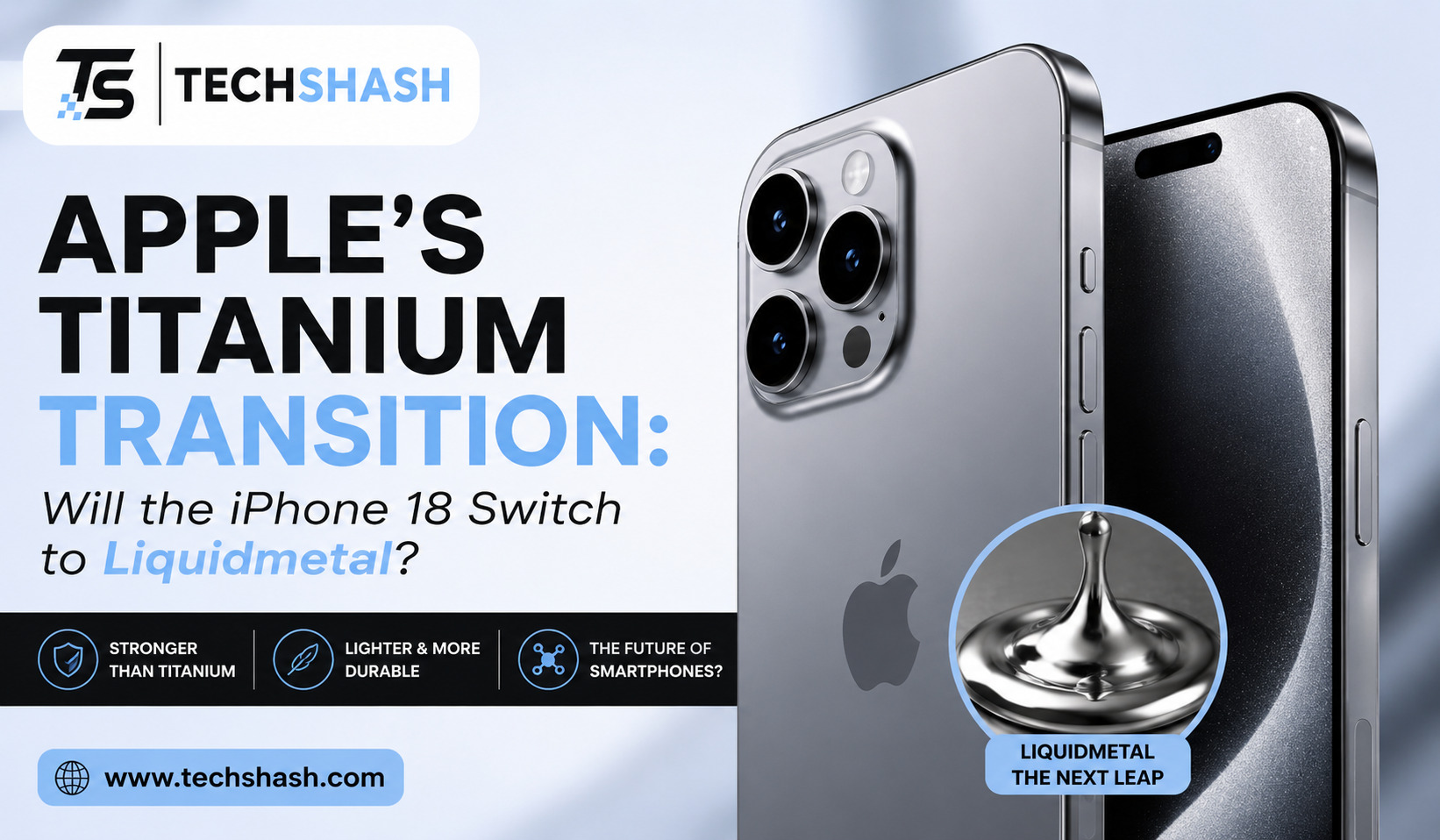
Every iPhone cycle brings a new round of arguments about what the phone is made of. This year, the rumor mill has added an unusual name to the mix: Liquidmetal.
The short version, based on current reporting, is that the iPhone 18 Pro is not expected to switch to Liquidmetal at all. The material is instead tied to a very different device. This article explains what Liquidmetal is, why it keeps surfacing in Apple leaks, and what the latest supply chain reporting actually says about the iPhone 18 lineup.
A Quick History of iPhone Frame Materials
Apple has changed the frame material on its Pro iPhones more than once in just a few years, and each switch came with its own tradeoffs. The iPhone 15 Pro and iPhone 16 Pro both used titanium, chosen for its strength-to-weight ratio and premium feel.
That titanium era did not last. The iPhone 17 Pro moved back to an aluminum frame, reportedly in part because titanium made heat dissipation harder to manage, an issue that became a bigger deal as Apple leaned further into on-device AI processing.
For the iPhone 18 Pro, the rumor mill spent months arguing about whether Apple would return to titanium, stick with aluminum, or try something else entirely. As of the most recent reporting, aluminum appears to have won that argument, at least for the standard Pro lineup.
What Liquidmetal Actually Is
Liquidmetal is the trade name for a type of amorphous metal alloy, sometimes called bulk metallic glass. Unlike ordinary metals, which cool into an orderly crystal structure, Liquidmetal cools so quickly during manufacturing that its atoms never settle into that structure.
That disordered atomic arrangement gives the material some unusual properties. It is notably hard, resistant to scratches and corrosion, and can be molded with very high precision, which makes it useful for small, complex parts rather than large structural panels.
Apple’s relationship with this material is not new. The company has held a licensing deal with Liquidmetal Technologies for over a decade, though its use so far has been limited to small components rather than anything resembling a phone chassis.
Why Liquidmetal Keeps Coming Up in iPhone Rumors
Liquidmetal rumors are almost a running joke among longtime Apple watchers. Versions of this same story circulated as far back as the iPhone 5 and iPhone 5S generations, tied to a patent filing for manufacturing sheets of the material.
None of those earlier rumors led anywhere close to a full iPhone body. Apple’s actual use of the material has stayed small, limited to items like the SIM ejector tool included in the box with iPhones.
This generation’s rumors are different in one respect. They are not really about the iPhone 18 Pro at all. They are tied to a specific new product: Apple’s first foldable iPhone.
What the Latest Leaks Say About the iPhone 18 Pro
For the iPhone 18 Pro and iPhone 18 Pro Max specifically, the more recent and more consistent reporting points toward aluminum, not titanium and not Liquidmetal. Multiple supply chain sources have described the iPhone 18 Pro as keeping the same aluminum unibody approach used in the iPhone 17 Pro.
One frequently cited argument for staying with aluminum is heat. As Apple pushes more AI processing directly onto the device, better heat dissipation becomes more valuable, and several leakers have argued that aluminum handles this better than titanium in a phone-sized frame.
There has been genuine disagreement among leakers on this point. A handful of reports floated the idea of Apple returning to titanium, or even exploring an improved titanium alloy for future Pro models. But the more recent and more widely repeated leaks describe Apple sticking with aluminum for this generation, with any material change unlikely before 2027 at the earliest.
Where Liquidmetal Might Actually Show Up
The device most consistently linked to Liquidmetal this cycle is Apple’s rumored foldable iPhone, sometimes referred to as the iPhone Fold or iPhone Ultra. Specifically, the rumors point to the hinge mechanism, not the outer chassis.
A folding hinge is a genuinely demanding engineering problem. It has to flex thousands of times without fatigue, hold tight tolerances so the screen lies flat when unfolded, and avoid the crease problems that have affected competing foldable phones. Liquidmetal’s resistance to fatigue and its ability to be cast with high precision make it a plausible fit for exactly this kind of part.
Reports suggest this hinge would likely be paired with an upgraded titanium alloy for the rest of the foldable’s body, rather than titanium being replaced everywhere. That combination, if accurate, would make the foldable iPhone the most significant use of Liquidmetal in an Apple product to date, even though it is still a small structural piece rather than the phone’s entire frame.
The Manufacturing Problem Nobody Has Solved
There is a reason Apple has never scaled Liquidmetal beyond small components, and it has nothing to do with the material’s properties. It has to do with mass production.
Casting large, complex Liquidmetal parts reliably, at the volume Apple needs for a flagship product line, remains extremely difficult. Even sources who describe Apple experimenting with the material for a foldable hinge tend to describe full-chassis use as impractical, at least for now, given cost and manufacturing constraints.
That distinction matters for expectations. A small, high-precision hinge component sits in a very different production category than an entire iPhone frame. Turning one into the other is not simply a matter of scaling up the same process.
So, Titanium, Aluminum, or Liquidmetal
Based on the most current reporting, the answer for the iPhone 18 Pro is straightforward: aluminum, continuing what Apple started with the iPhone 17 Pro. Titanium remains in use elsewhere in the lineup, reportedly including the iPhone Air, but it does not appear to be returning to the Pro models this generation.
Liquidmetal is real, and Apple’s interest in it is real too, but the current evidence points to a narrow, specific application inside the foldable iPhone’s hinge rather than a chassis-wide material transition across the iPhone 18 family. Anyone picturing an iPhone 18 Pro with a full Liquidmetal body is describing a device that does not match what current supply chain reporting actually says.
Key Takeaways
- iPhone 18 Pro material: Recent, consistent leaks point to aluminum, not titanium or Liquidmetal.
- What Liquidmetal is: An amorphous metal alloy, prized for hardness, precision molding, and fatigue resistance.
- Where it might appear: The hinge of Apple’s rumored foldable iPhone, not the standard Pro chassis.
- Why aluminum wins for now: Better heat dissipation matters more as on-device AI processing increases.
- The real obstacle: Mass-producing large Liquidmetal parts remains impractical at iPhone production volume.
- Titanium’s status: Still used in devices like the iPhone Air, but not confirmed for the iPhone 18 Pro lineup.
Frequently Asked Questions
Will the iPhone 18 Pro be made of Liquidmetal?
Current reporting points to an aluminum frame for the iPhone 18 Pro, not Liquidmetal.
What is Liquidmetal made of?
Liquidmetal is an amorphous metal alloy that cools too quickly to form a regular crystal structure, giving it added hardness and precision-molding advantages.
Has Apple used Liquidmetal before?
Yes, Apple has held a licensing deal with Liquidmetal Technologies for over a decade, but has only used the material in small parts like the SIM ejector tool.
Which upcoming Apple device is most linked to Liquidmetal?
The rumored foldable iPhone, specifically its hinge mechanism, is the device most consistently connected to Liquidmetal in current leaks.
Why has Apple not made a full iPhone body from Liquidmetal?
Reports indicate that mass-producing large, complex Liquidmetal parts reliably remains impractical and expensive at iPhone production volumes.
Conclusion
The idea of an iPhone 18 built from Liquidmetal makes for an exciting headline, but it does not match what current supply chain reporting describes. The iPhone 18 Pro looks set to stay with aluminum, continuing the direction Apple took with the iPhone 17 Pro, while Liquidmetal’s most credible role this cycle is a small but demanding one inside the hinge of Apple’s first foldable iPhone.