Smartphones carry our private conversations, financial accounts, and personal identities everywhere we go. Sophisticated cyber attacks target these devices every day with hidden tools that traditional antivirus programs cannot see. Understanding how modern mobile security chips protect your data at the hardware level is essential for keeping your personal information safe.
Modern mobile phones no longer rely only on software applications to stop dangerous cyber threats. Instead, silicon engineers build dedicated microprocessors directly into the phone circuit board to create a physical defense zone. This comprehensive guide explains how these specialized hardware security components operate to defend your device against sophisticated malicious software.
1. Understanding the Rise of Advanced Mobile Malware
Mobile devices face far more complex threats today than simple fake applications or basic phishing scams. Cybercriminals build sophisticated software tools that can bypass standard operating system permissions without user knowledge.
These high-level threats often exploit zero-day vulnerabilities present inside standard system software. A zero-day exploit targets security flaws that software developers have not yet discovered or patched. Once inside, malicious code can track key presses, copy saved passwords, and record sensitive screen activity.
Traditional antivirus applications operate within the main operating system environment. Because of this position, security apps share the exact same software space as hidden threats. If malicious code gains administrative control over the main processor, it can simply turn off the security application. Hardware-level defenses were developed specifically to solve this fundamental design weakness.
2. What Are Mobile Security Chips and How Do They Work?
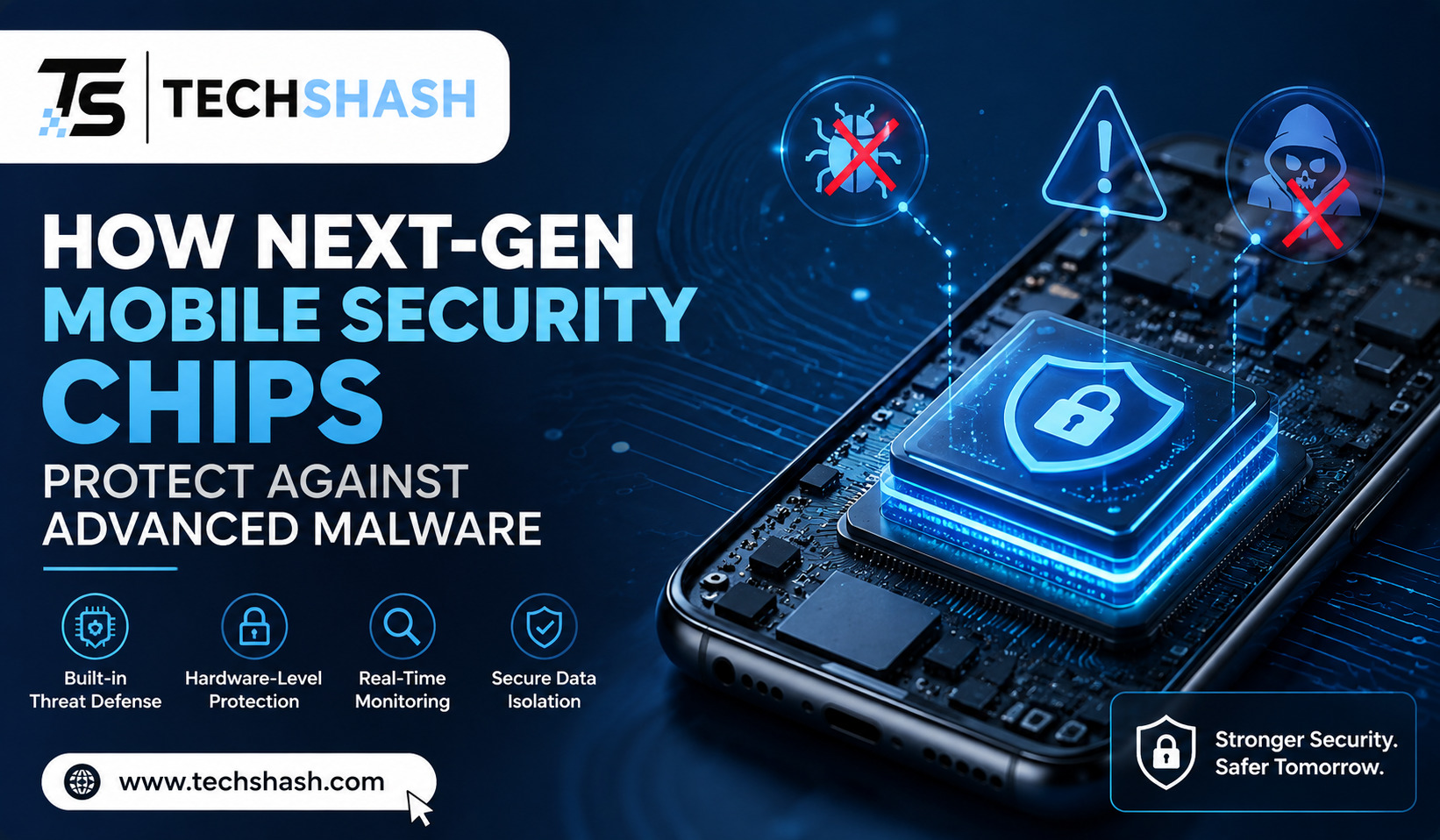
Specialized mobile security chips are standalone physical microprocessors integrated into modern smartphone designs. They operate entirely separate from the main application processor that runs your daily software programs.
These dedicated chips run their own minimal operating systems, which are called microkernels. Because they do not share system memory or processing power with normal applications, software bugs on your phone cannot touch them. They act as independent vault keepers inside the hardware.
When you power on your smartphone, the security chip wakes up first. It conducts cryptographic checks to verify that every layer of system software remains pure and unmodified. Only after confirming that the operating system is safe will the chip grant access to encrypted personal files.
3. Hardware-Level Security Versus Software Defense Mechanisms
Software defenses function like a wooden door lock inside a house. If a burglar manages to steal the main key, every room behind that wooden door becomes accessible.
Hardware defenses operate more like a subterranean safe made of solid reinforced steel. Even if an attacker controls the main house structure, they still cannot open the steel safe without the correct physical key combination. This design difference creates a clear distinction between the two security approaches.
- Software Defenses: Standard antivirus apps rely on pattern databases to detect known bad files. They operate inside general system memory and can be disabled if an attacker gains root access to the device.
- Hardware Defenses: Specialized chips use physical hardware isolation to separate sensitive tasks from the primary system. They execute cryptographic functions using built-in circuits that software cannot alter or bypass.
- Tamper Protection: Physical security modules monitor physical conditions like power voltage and circuit temperature. If an attacker attempts to freeze or probe the physical chip, it automatically locks down access to prevent data extraction.
4. Key Architecture Features of Next-Gen Mobile Security Chips
Engineers include specific physical components inside next-generation hardware security modules to guarantee total protection. These elements work in harmony to form what security researchers call a hardware root of trust.
The main processing unit inside a mobile security module uses a dedicated RISC-V or ARM architecture core. This core runs independently from the primary chip that powers your mobile games and camera applications. It handles cryptographic operations using built-in mathematical accelerators that process calculations in fractions of a second.
Physical random number generators create unpredictable digital keys for file encryption. Standard software programs use mathematical formulas to guess numbers, which smart attackers can predict. Hardware random generators use physical electrical noise to create truly random numbers that no computer can guess.
5. How Secure Enclaves Isolate Sensitive Data from Harm
Modern smartphones use isolated regions within the silicon structure to handle secret user information. Tech companies call these areas secure enclaves, hardware security modules, or vault subsystems depending on the manufacturer platform.
Your fingerprint scans, facial recognition data, and lock screen PINs never leave this protected area. When you place your finger on the scanner, the sensor sends the biometric math directly to the security module. The main operating system only receives a simple yes or no message confirming your identity.
This structural separation protects your sensitive payment cards when you use digital wallet features. The security chip generates a unique transaction code for each purchase. The actual credit card number remains locked inside the physical silicon vault where no third-party application can read it.
6. Real-Time Memory Protection and Rootkit Prevention
Advanced malicious software often tries to infect system memory to steal data while applications execute. Attackers use memory overflow bugs to force programs into revealing secret encryption keys.
Next-generation processors utilize an advanced defense mechanism called memory tagging technology to defeat this attack method. The hardware assigns tiny digital tags to specific blocks of memory allocated to an application. If an unauthorized piece of code attempts to read a tagged memory block, the processor instantly crashes the application before data leaks.
Boot process protection prevents dangerous software known as rootkits from installing themselves deep within the operating system. Rootkits try to start running before your phone security tools turn on. The security chip validates every single step of the startup sequence, blocking any altered code from running during startup.
7. Real-World Attack Scenarios Blocked by Dedicated Chips
Physical security hardware stops many common attack tactics that bypass software defenses. Reviewing real scenarios helps illustrate how these chips protect users every single day.
- Brute-Force Lock Screen Attacks: If a thief steals your phone, they might use automated software to guess your PIN millions of times. The security chip enforces physical delay timers between wrong guesses, making brute-force cracking mathematically impossible.
- System Version Rollback Attacks: Cybercriminals sometimes try to install an older version of Android or iOS that contains known security bugs. Security chips keep a permanent physical counter that prevents the device from booting outdated software versions.
- Physical Probe Attacks: Specialized hackers can slice open a microchip to read data directly with microscopic needles. Security chips contain physical shield layers that destroy stored encryption keys instantly if physical light or micro-needles touch the circuit.
- Malicious Charging Cable Attacks: Modified charging cables can attempt to send bad commands to your phone processor over USB connections. Security chips verify all incoming data requests before granting access to internal device storage.
Key Takeaways
- Hardware Isolation: Specialized security chips operate on dedicated silicon completely separate from the main mobile processor.
- Protected Credentials: Sensitive biometric data, PIN codes, and encryption keys never leave the secure hardware module.
- Memory Tagging: Modern hardware tags memory locations to stop memory corruption attacks in real time.
- Boot Integrity: The chip verifies system software during startup to prevent rootkits and unauthorized software rollbacks.
- Tamper Prevention: Physical sensors inside the chip detect physical tampering and destroy sensitive keys to prevent hardware theft.
FAQs
What is a mobile security chip?
A mobile security chip is an isolated physical microprocessor built into a phone to store encryption keys and manage biometric authentication safely.
How do mobile security chips differ from software antivirus applications?
Hardware security chips run on physically separated silicon that main operating system malware cannot reach or turn off.
Can malware infect a dedicated mobile security chip?
Malware cannot infect dedicated security chips because they run tiny, read-only operating systems that accept only signed code updates verified by physical hardware.
Do mobile security chips slow down smartphone performance?
Dedicated security chips improve overall phone performance by offloading heavy mathematical encryption tasks from the primary application processor.
Are mobile security chips available on budget smartphones?
Many modern budget and mid-range mobile phones now include hardware security modules to protect basic user authentication and payments.
Conclusion
The growing complexity of mobile threats makes hardware-level protection vital for modern smartphone security. Dedicated mobile security chips provide an unyielding defense by physically separating sensitive encryption keys and biometric data from the main operating system. By verifying software integrity at startup and monitoring memory in real time, these hardware modules ensure your personal data remains safe even if malicious applications compromise system software. Relying on devices built with dedicated security hardware is the single best step you can take to safeguard your digital life.