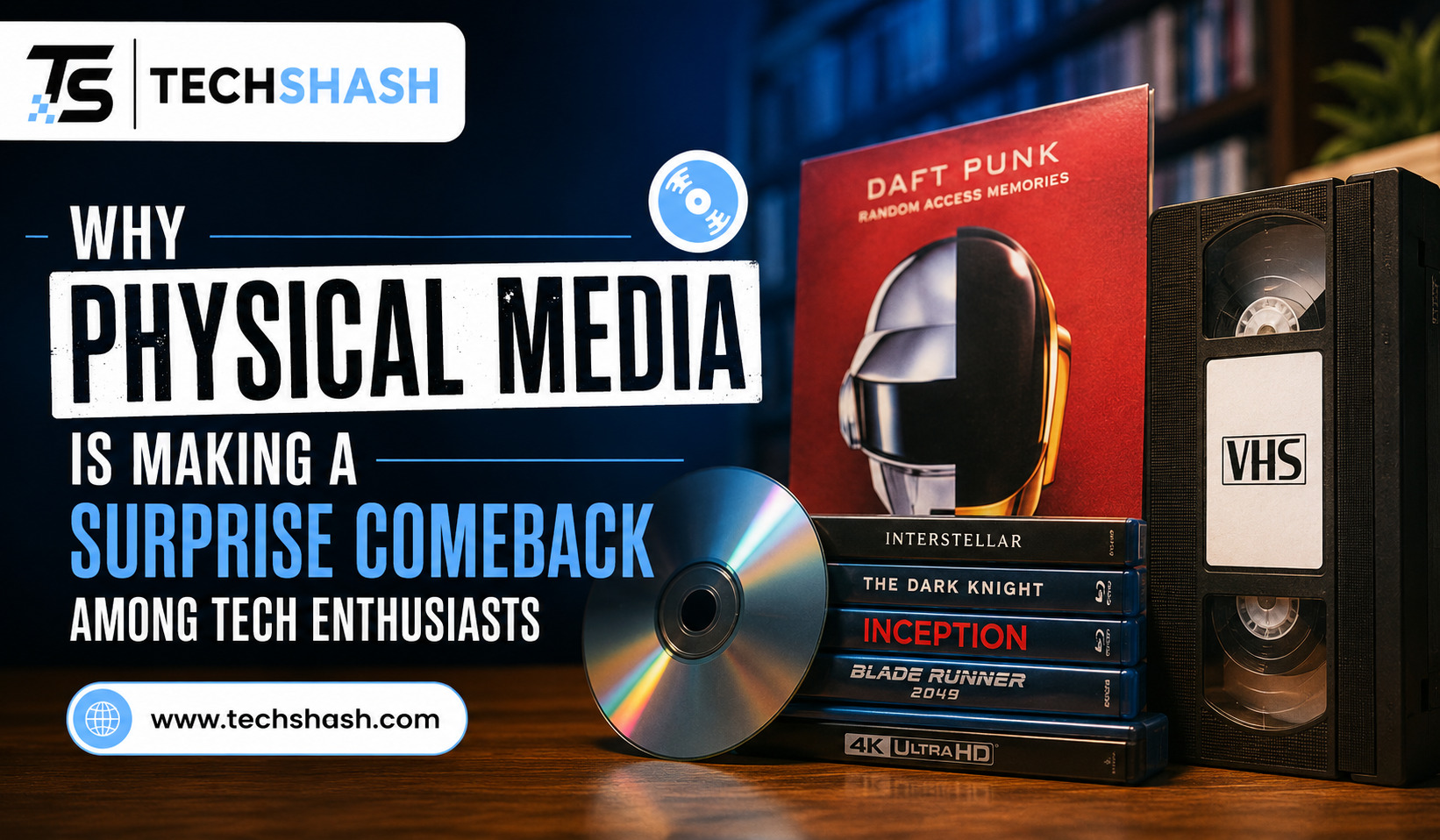
Streaming services promised endless access to movies, music, and games without requiring a single inch of shelf space. Millions of people eagerly gave up their discs and cartridges in exchange for instant digital access.
However, a surprising change is happening across the technology community today. The physical media comeback is gaining real momentum as dedicated technology lovers return to vinyl, Blu-ray discs, and physical game cartridges.
People are discovering that digital convenience comes with hidden drawbacks. When server outages occur or licensing agreements expire, digital files can vanish without warning.
This comprehensive guide explains why tech-savvy users are building physical libraries once again and how tangible formats provide permanent value in a purely digital world.
1. Ownership Versus Licensing: The Growing Threat of Disappearing Content
Many buyers assume that clicking a buy button on a digital store gives them permanent ownership of a film or song. In reality, modern digital storefronts only sell a temporary license to view or listen to that content.
These end-user license agreements give companies full rights to modify, alter, or completely delete titles from user accounts. When distribution rights expire between studios and platforms, paying customers often lose access to their favorite purchases overnight.
Recent history shows many examples of digital platforms quietly wiping entire libraries of purchased television shows and movies. Digital distribution creates a system where users rent media rather than truly owning it.
Collecting physical formats completely eliminates this vulnerability. A physical disc sitting on a shelf belongs entirely to the buyer. No technology corporation can log in remotely to revoke or alter a physical disc you bought.
For technology enthusiasts who value control over their personal asset libraries, permanent ownership guarantees make physical formats far superior to cloud storage subscriptions.
Digital Rights Management Challenges
Digital Rights Management systems require active servers to check authorization keys before playing files. If a corporate company decides to shutdown these license servers, purchased software and digital movies simply stop working forever.
Content Editing and censorship
Streaming platforms frequently update older movies and television programs to alter scenes or remove objectionable content entirely. Owning original physical releases ensures you always possess the exact original cut of a film as intended by its creators.
2. Uncompressed Quality: Why Cinephiles and Audiophiles Reject Streaming Compression
Convenience always demands a trade-off in technical performance. To transmit millions of video and audio streams simultaneously across international networks, streaming companies compress file sizes heavily.
This massive compression strips away critical visual data and audio nuance from the original master files. Dark scenes in streamed movies often exhibit blurry color banding, while audio channels lose depth and dynamic balance.
High-definition disc formats solve these technical limitations completely. A standard 4K Ultra High Definition Blu-ray disc holds up to one hundred gigabytes of pure data.
This high capacity allows video to stream at video bitrates reaching up to one hundred megabits per second. By comparison, top streaming services usually limit their video streams to less than twenty-five megabits per second.
Audio quality shows an even larger gap between formats. Streaming platforms rely on compressed audio formats like AAC, whereas physical discs carry uncompressed lossless audio tracks like Dolby TrueHD and DTS-HD Master Audio.
Visual Clarity and HDR Performance
Physical discs reproduce fine image details like skin textures and background shadow details far more accurately. Higher bitrates prevent visual artifacts and compression noise during high-action scenes.
Surround Sound Immersion
Lossless audio channels deliver deep bass and pinpoint positional clarity to home theater speaker systems. Uncompressed audio makes explosions sound punchier and background whispers sound crystal clear.
3. Tactile Nostalgia and the Joy of Tangible Collections
Humans are physical creatures who interact naturally with real object textures and weight. Staring at an endless gallery of tiny digital thumbnails on a TV screen lacks the sensory depth of holding an album cover.
Holding a physical record or reading a detailed movie booklet creates a strong mental connection to art. Vinyl records, steelbook movie cases, and special collector boxes give physical form to abstract entertainment.
Building a physical collection turns entertainment into an intentional personal hobby. Browsing through a room filled with curated albums or movies feels far more satisfying than scrolling through corporate algorithms.
The deliberate ritual of choosing a disc, removing it gently from its protective sleeve, and inserting it into a player changes how we pay attention. This physical process forces viewers to slow down and enjoy media thoughtfully.
Technology lovers appreciate the mechanical precision inside optical drives and turntable needles. The tactile physical connection brings personality back into an increasingly screen-dominated lifestyle.
The Rise of Vinyl Records
Vinyl record sales have grown steadily for nearly two decades straight. Music fans love the rich artwork, gatefold packaging, and organic sound warmness that digital MP3 files cannot match.
Custom Artwork and Packaging
Special edition steelbooks and boxed sets feature custom cover art created by renowned artists. These physical packages serve as decorative art pieces inside home entertainment spaces.
4. Freedom from Subscription Fatigue and Persistent Price Hikes
Streaming services were originally marketed as an affordable alternative to expensive cable television subscriptions. Consumers could watch thousands of titles for a single low monthly payment.
Today, media companies have split their catalogs across dozens of competing streaming channels. Keeping up with popular shows now requires subscribing to five or six different platforms simultaneously.
Subscription prices rise continuously every single year while available content libraries shrink. Streaming companies regularly cancel shows and remove popular movies to avoid paying residual royalty fees.
Purchasing physical discs provides complete immunity against endless subscription price increases. You pay for a disc once, and it remains free to watch for the rest of your life.
Yearly Cost Comparison:
– 5 Active Streaming Services: ~$1,000 / year (Ongoing)
– Physical Media Library: One-time cost per item (Permanent ownership)
Relying on physical collections also protects entertainment access during home internet outages or regional network failures. Physical discs work completely offline without internet connection, providing reliable entertainment anytime you turn on your hardware.
5. Video Game Preservation and the Risk of Digital Delistings
The video game industry has shifted aggressively toward digital download storefronts over the past decade. Digital console stores offer quick access, but they create severe risks for video game history preservation.
When console makers shut down online legacy stores, hundreds of digital-only games disappear forever. Players who did not download those titles in advance lose access permanently.
Physical game discs and cartridges serve as vital physical archives for interactive software history. Having game data stored on physical media allows classic games to survive long after corporate support ends.
Digital Store Closures Impact:
– Nintendo Wii U & 3DS eShops: Closed (1,000+ digital games unavailable)
– Xbox 360 Marketplace: Retired (Hundreds of arcade titles delisted)
– Physical Discs & Cartridges: Still playable on original hardware indefinitely
Many contemporary physical games still store complete playable software builds directly on their retail discs. Poping a physical game disc into a console allows you to play the baseline game without needing an internet connection.
Technology enthusiasts who value historical preservation recognize physical game copies as essential artifacts. Preserving physical media protects interactive software history from corporate erasure.
Retro Gaming Hardware
Original game cartridges for older gaming systems continue to rise in market value. Collectors value these physical items because they play instantly without modern software patches or network sign-ins.
Second-Hand Game Markets
Physical games retain real resale value after you finish playing them. Players can sell, trade, or lend physical game discs to friends, something digital downloads strictly prohibit.
6. How Tech Enthusiasts Integrate Physical Media into Modern Homes
Returning to physical media does not mean abandoning modern smart home technology. Tech enthusiasts excel at combining classic physical formats with modern local network hardware.
Many collectors convert their physical Blu-ray discs into digital files stored on private local servers. Using software platforms like Plex or Jellyfin, users stream uncompressed media across their home network.
This hybrid approach offers the instant convenience of streaming while maintaining the complete quality and ownership of a physical collection. You keep the original physical disc safely on your shelf as an unalterable backup copy.
Creating private media servers gives enthusiasts total control over metadata, poster art, and audio settings. Enthusiasts build private media servers that run locally inside their homes without external cloud dependencies.
Physical media forms the essential foundation for these modern home server projects. Without physical discs, creating private high-bitrate media libraries would be nearly impossible.
Key Takeaways
- Unmatched Ownership: Physical discs guarantee you retain permanent access to movies and games without fear of corporate licensing revocations.
- Superior Quality: Physical 4K UHD Blu-ray discs offer up to four times the video bitrate of typical 4K streams, alongside uncompressed audio tracks.
- Financial Protection: Collecting physical copies shields entertainment budgets from rising monthly subscription costs and split catalog fragmentation.
- Offline Dependability: Physical formats play instantly during internet service outages and require no user tracking software.
- Historical Preservation: Physical game cartridges and discs preserve software history when online digital storefronts shut down permanently.
FAQs
Why is a physical media comeback happening right now?
Tech enthusiasts are returning to physical discs because digital streaming services continue raising subscription prices while removing popular content from their libraries.
Do physical Blu-ray discs really look better than 4K streaming?
Yes, 4K Blu-ray discs provide significantly higher video bitrates and uncompressed audio channels that look sharper and sound better than compressed internet streams.
Can digital companies delete movies that I already purchased online?
Yes, digital storefront terms allow companies to remove titles from user libraries whenever corporate distribution rights expire.
How does physical media help video game preservation?
Physical game discs and cartridges preserve original software code offline so games remain playable long after digital console stores shut down permanently.
Conclusion
The rising popularity of the physical media comeback proves that digital convenience cannot replace true ownership, picture quality, and physical connection. Tech enthusiasts are leading this movement by choosing physical discs, vinyl records, and local hardware over restrictive cloud rentals. Building a physical media library ensures your favorite movies, music, and games remain safe, pristine, and accessible for decades to come.