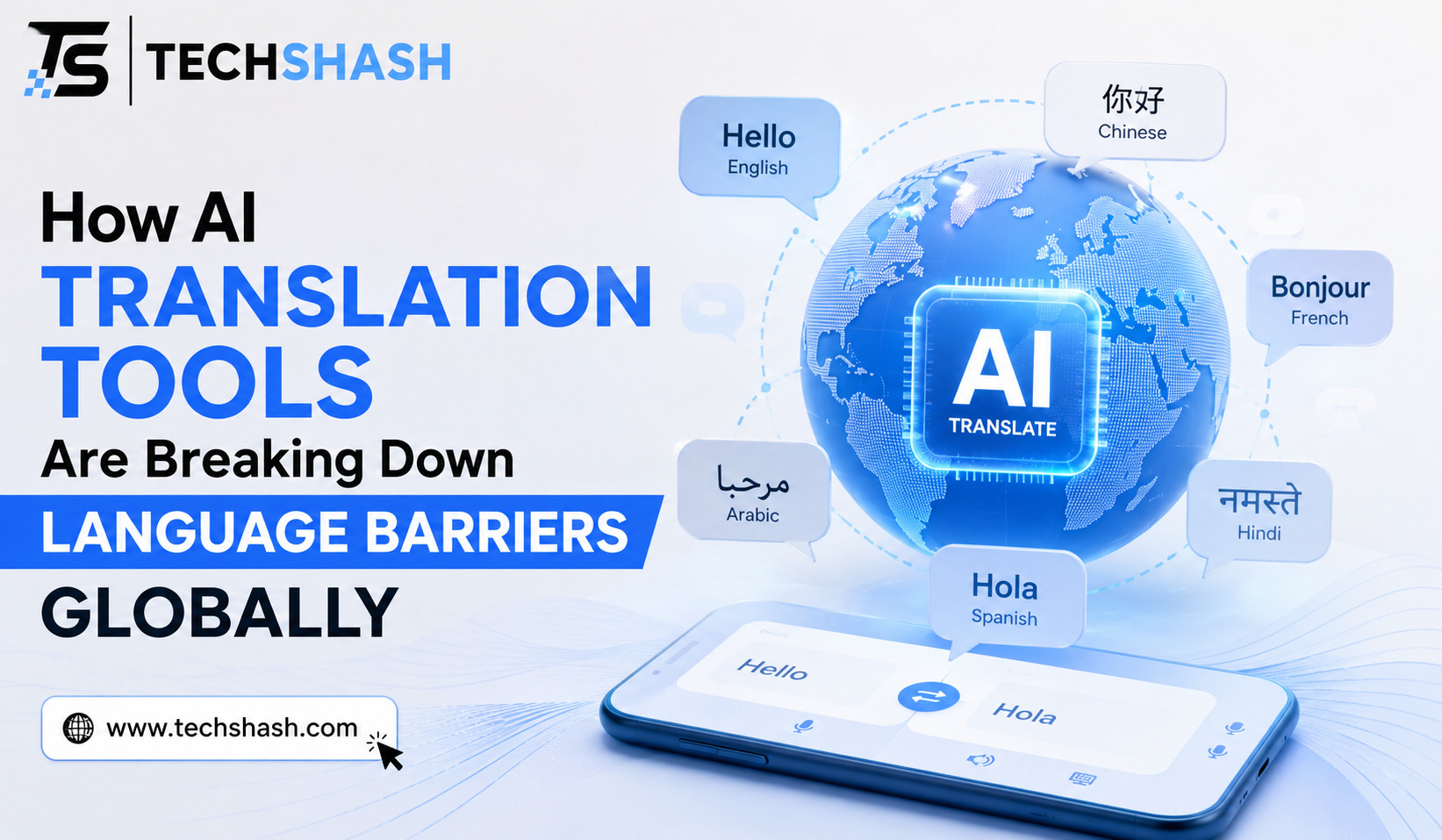
People across the world speak more than seven thousand distinct human languages everyday. For centuries, communicating across these linguistic boundaries required years of intense language study or expensive professional human translators. Today, modern AI translation tools are breaking down language barriers globally by converting spoken and written text almost instantly. This comprehensive article will explore how these new technologies function, where they make the largest impact, and what limits still exist.
1. The Evolution of Translation Technology over the Decades
Early automated translation systems relied on rigid rules programmed directly into computers by human linguists. These early systems matched words directly from bilingual dictionaries and applied basic grammatical formulas. Because human speech contains endless variations, exceptions, and subtle contexts, these rule-based machines often produced awkward or completely incorrect sentences.
During the late nineties and early two thousands, statistical machine translation began replacing older rule-based methods. Instead of following rigid human rules, statistical tools analyzed millions of paired sentences from government archives and public documents. The software calculated mathematical probabilities to guess which phrase in one language matched a phrase in another.
Rule-Based Era (1950s – 1980s)
└─ Direct dictionary matching + basic rules
Statistical Era (1990s – 2000s)
└─ Word-probability calculations based on large text databases
Neural & Deep Learning Era (2010s – Present)
└─ Artificial neural networks processing entire sentence contexts
The real revolution arrived when computer scientists introduced artificial neural networks to linguistics. Neural systems do not translate text word by word or phrase by phrase. Instead, neural systems process whole sentences at once, analyzing how every word relates to every other word in that sentence. This shift brought natural flow, accurate grammar, and high context recognition to modern translation software.
From Simple Dictionaries to Neural Networks
Old translation software made frequent mistakes because individual words often have multiple meanings. For example, the English word bank can refer to a financial institution or the ground beside a river. A rule-based dictionary struggled to choose the correct meaning without context.
Neural networks solve this problem by looking at surrounding words in real time. If the surrounding text mentions water, fishing, or mud, the system instantly selects the riverbank meaning. This contextual awareness makes modern translations far more reliable for everyday communication.
The Rise of Large Language Models
Large language models represent the newest phase of automated translation technology. These models train on massive collections of digital text from books, websites, and research papers across many languages.
As a result, modern tools do not just swap words between two languages. They understand subtle tone, intent, and stylistic preferences requested by the user. Someone can now ask a software tool to render a formal business email into casual conversation in another tongue.
2. Transforming Global Business and Daily Workplace Communication
Global commerce requires constant communication across international borders, time zones, and regional languages. In the past, small businesses could rarely afford to hire multilingual staff or pay third-party translation agencies for daily correspondence. Modern translation systems have completely changed this economic reality for entrepreneurs and established companies alike.
Cross-border e-commerce platforms now use automated text software to translate product descriptions automatically. A customer in Japan can read about an item crafted in Brazil in clear Japanese without delay. This capability allows small businesses to compete globally without spending huge sums on localization services.
Traditional Translation Workflow:
Draft Document ➔ Send to Agency ➔ Wait Days ➔ Receive Translation ➔ High Cost
Modern AI Translation Workflow:
Draft Document ➔ Run through Software ➔ Instant Output ➔ Human Quick Review ➔ Low Cost
Workplace messaging platforms now include instant translation features built into chat interfaces. Workers in different countries can type messages in their native language while teammates read those messages in theirs. This technology removes silent friction from remote collaboration and helps teams coordinate projects efficiently.
Instant Customer Support Across Languages
Customer support centers previously had to organize agents by language background. If an agent who spoke German was unavailable, German-speaking customers faced long waiting times. Automated software now translates live support chats in real time. A support agent fluent only in English can assist callers from South America, Asia, or Europe smoothly.
- Customer types a question in their native language.
- Software instantly converts the question for the support representative.
- Representative responds in their own language.
- Software translates the answer back to the customer instantly.
This continuous workflow reduces customer wait times dramatically. It also cuts operational expenses for companies while providing immediate answers to customers around the globe.
International Meetings and Live Speech Translation
Virtual video conference platforms now offer live automated captions in dozens of languages. As a speaker addresses an audience in Spanish, participants can select translated subtitles in English, Hindi, or Mandarin.
This capability makes global webinars and company town halls truly accessible to all participants. People no longer feel left out of essential discussions simply because they are not fluent in the speaker’s language.
3. Essential Role in Healthcare, Disaster Relief, and Education
While business efficiency is important, automated language translation also saves lives in critical situations. Hospitals, relief groups, and schools routinely interact with people who do not speak the local dominant language. Rapid translation capability ensures vital information reaches people when every minute counts.
Emergency rooms frequently treat patients who cannot explain their medical history or pain levels due to language barriers. Waiting hours for an in-person interpreter can delay critical medical decisions. Portable tablet devices equipped with voice translation software let doctors and patients talk immediately.
During natural disasters, aid workers often enter regions where rare local dialects are spoken. Software tools allow relief teams to translate shelter locations, clean water advisories, and medical triage steps instantly. Disaster relief efficiency improves when emergency updates reach affected populations without communication delays.
Breaking Barriers in Modern Classrooms
Educational institutions enroll students from diverse linguistic backgrounds every year. Language differences can prevent bright students from keeping up with lesson plans or asking questions.
Teachers use automated captioning and document translation software to convert reading assignments and lecture slides. This practice helps non-native speakers follow along with lessons while learning the local language at their own pace.
Preserving Access to Global Academic Research
Scientific research moves forward faster when researchers share findings globally. However, thousands of important studies are published in languages other than English every year.
Researchers now use advanced text conversion systems to scan academic papers written in foreign languages. This access prevents duplicate scientific efforts and allows scholars anywhere to build upon global discoveries.
4. Key Capabilities That Power Modern AI Translation Tools
Modern AI translation tools rely on sophisticated computing concepts to handle the complex structure of human language. Understanding these technical components helps explain why software performs so much better today than it did ten years ago.
One key technology is speech synthesis coupled with automated speech recognition. Speech recognition converts audio signals from a human voice into digital text. Once translated, speech synthesis converts that text back into natural-sounding voice audio in another language.
Human Voice ➔ Audio Recognition ➔ Source Text ➔ Neural Translation ➔ Target Text ➔ Voice Synthesis ➔ Output Audio
Another capability is image text recognition, often called optical character recognition. Users can point a smartphone camera at a foreign road sign, restaurant menu, or printed notice. The application reads the text from the image, translates it, and overlays the new text directly onto the picture.
Neural Networks and Contextual Processing
Neural translation networks rely on layered mathematical structures inspired by human brain cells. These layers analyze input sentences through multiple steps of context evaluation.
- Encoder: Reads the source text and converts its meaning into a mathematical vector representation.
- Attention Mechanism: Focuses on specific relevant words in the sentence while converting each piece.
- Decoder: Takes the mathematical vector and constructs a natural sentence in the target language.
This three-part structure ensures that grammatical order fits the target language rather than forcing the source language structure. For example, adjective positions vary greatly between romance languages and Germanic languages, and neural models adjust this automatically.
Multi-Modal Translation Features
Multi-modal systems process text, audio, and visual information simultaneously. If a user uploads a video recorded in French, the tool generates translated English audio while synchronizing speaker lip movements.
This multi-modal capability opens new avenues for entertainment, global news broadcasting, and online educational videos. Creators can share their video content globally without paying for expensive manual dubbing sessions.
5. Current Limits, Cultural Challenges, and Human Supervision
Despite impressive technological progress, automated translation tools are not flawless. Human language is deeply connected to culture, local history, humor, and social context. Software algorithms often fail when faced with non-literal speech or subtle cultural customs.
Idioms present a major obstacle for computer algorithms. For instance, the English phrase pulling my leg means joking with someone. A literal translation into another language might confuse readers by suggesting physical harm.
Literal Translation Pitfall Example:
English Phrase: “To bite the bullet”
Incorrect Literal Translation: “To place lead ammunition in one’s mouth”
Correct Contextual Translation: “To face a difficult situation with courage”
Data privacy also raises concern among corporate leaders and government officials. When employees paste confidential documents into free online translation websites, that information may be stored on external servers. Companies must use secure, enterprise-grade tools to keep sensitive information safe.
Low-Resource Languages and Digital Bias
Automated translation systems perform exceptionally well for common language pairs like Spanish to English or French to German. This success occurs because billions of translated sentences exist online to train computer models.
However, hundreds of smaller languages have very little digital text available for training software. Languages spoken in parts of Africa, Indigenous America, and rural Asia are often called low-resource languages. Technology companies are working to fix this imbalance, but progress remains slow for less common languages.
The Continued Need for Human Translators
Because software can make mistakes with tone and context, human oversight remains vital for high-stakes projects. Legal contracts, medical records, official government publications, and creative literature still require careful review by human professionals.
When to use pure software versus human review:
Casual Chat Messaging ──► Pure Software (Fast and Free)
Travel & Directions ──► Pure Software (Sufficient Accuracy)
Business Correspondence ──► Software + Quick Human Polish
Legal Contracts & Meds ──► Professional Human Translator Required
Instead of replacing human translators completely, software has transformed their daily roles. Translators now act as expert editors who refine machine-generated drafts. This hybrid process speeds up translation projects while preserving precision and cultural nuance.
6. Key Takeaways
- Technology Shift: Translation tools evolved from basic dictionary lookup systems into context-aware neural networks and language models.
- Business Impact: Companies use live text and speech translation to run cross-border e-commerce and offer real-time customer service worldwide.
- Life-Saving Uses: Healthcare providers and emergency relief groups rely on mobile translation devices to care for patients during crises.
- Technical Capabilities: Modern systems translate written words, spoken audio, and text captured in images using optical character recognition.
- Cultural Limits: Algorithms still struggle with idioms, sarcasm, local cultural nuances, and low-resource regional languages.
- Human Expertise: Critical legal, medical, and literary documents still require review by professional human linguists.
7. Frequently Asked Questions
Do AI translation tools replace the need for professional human translators?
These automated tools assist human translators by speeding up preliminary drafts, but expert human supervision remains necessary for important legal, medical, and creative content.
How do neural networks improve translation accuracy over older software?
Neural networks evaluate the context of an entire sentence simultaneously instead of translating individual words or short phrases in isolation.
Can translation software handle live spoken conversations during video calls?
Modern communication software can capture live audio, convert it into text, translate it, and produce voice speech in real time during video calls.
Why do translation tools struggle with local idioms and regional slang?
Idioms contain figurative meanings that cannot be understood through literal word definitions, which confuses mathematical computer models.
Are free online translation services safe for sensitive corporate documents?
Free online translation tools may store uploaded text on public servers, making secure enterprise translation software necessary for confidential business records.
8. Summary of Global Language Access
The rapid development of AI translation tools has changed how individuals, businesses, and communities connect across national borders. By converting text, voice, and images instantly, these applications lower historical barriers to trade, education, and medical care. While algorithms still require human editing for complex cultural nuances, software bridges communication gaps every single day. Language is no longer a permanent barrier to global cooperation and understanding.