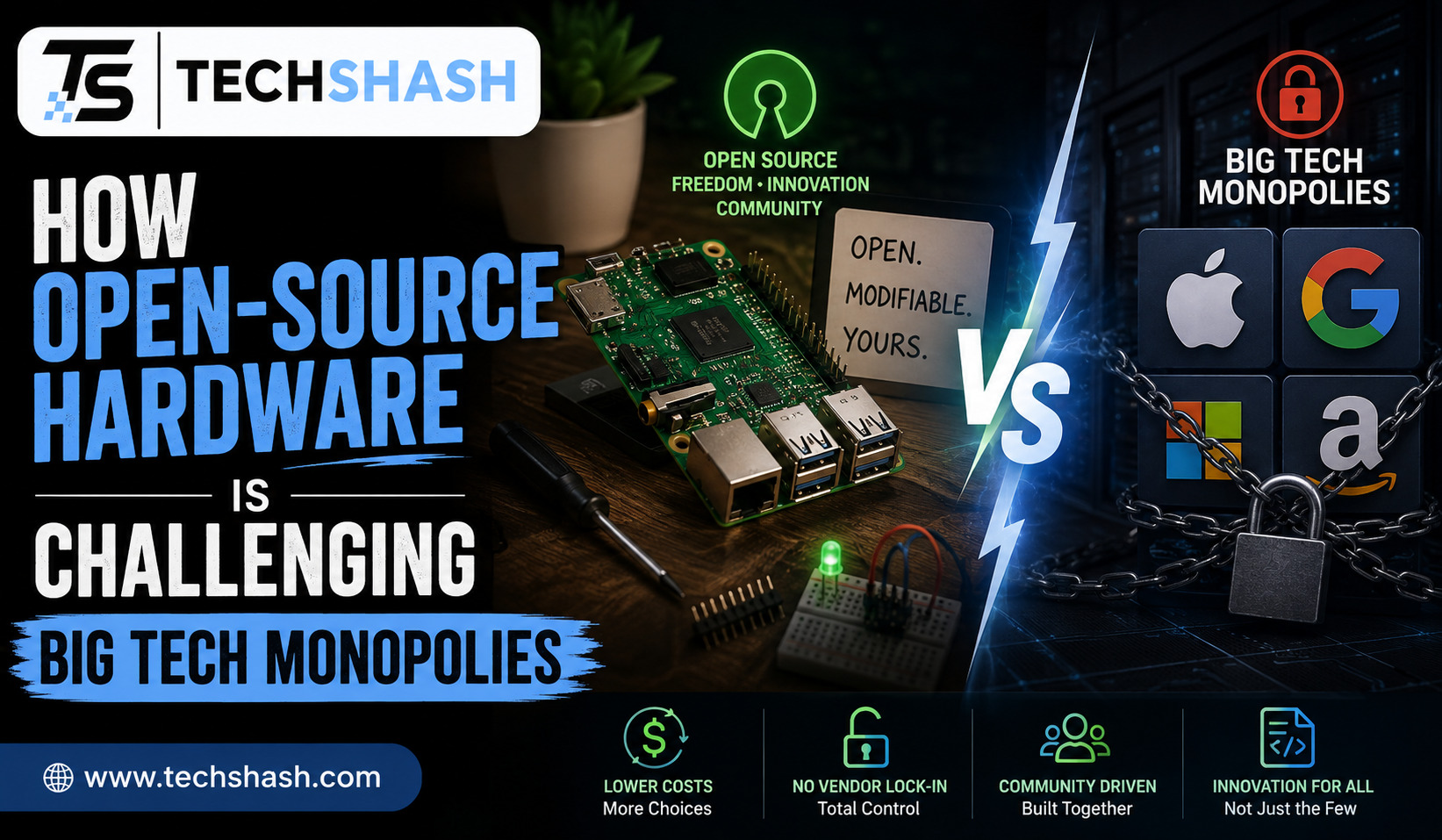
For decades, a tiny group of massive technology corporations has controlled almost every device we use daily. From smartphones and laptops to cloud servers, proprietary hardware designs keep users locked into closed ecosystems. However, a growing global movement is shifting the balance of power. Open-source hardware is now offering a viable alternative that promises to break big tech monopolies and put control back into the hands of users and independent creators. This article explores how this hardware revolution works, why it matters, and how it is reshaping the future of electronics.
1. The Dominance of Proprietary Hardware Monopolies
A few mega-corporations control the core blueprints of modern technology. Companies that design computer chips and consumer devices guard their schematics with heavy legal protections. This practice creates a system of strict vendor lock-in, where customers must rely entirely on one company for repairs, software updates, and hardware upgrades.
When a single company holds total control over physical designs, competition suffers. Users cannot modify their devices or fix broken parts without official permission. Over time, this setup leads to higher prices, planned obsolescence, and massive amounts of electronic waste.
The Hidden Costs of Closed Systems
Closed hardware limits what users can actually do with the products they own. Software can be patched by anyone who knows how to code, but physical hardware remains shielded by patent walls. Because users cannot inspect internal circuit boards, security vulnerabilities often stay hidden for years.
Furthermore, supply chain bottlenecks happen when only two or three global factories hold the legal rights to make critical microchips. If one manufacturer faces a delay, the entire global market feels the impact immediately.
2. Understanding Open-Source Hardware and Its Core Principles
Open-source hardware refers to physical technology whose design files, circuit diagrams, and bill of materials are made free for public use. Anyone can study, modify, build, or sell these hardware products without paying royalty fees.
This approach applies the principles of open software to physical items like microprocessors, sensors, and full computing kits. By releasing full design blueprints online under public licenses, creators invite global collaboration instead of hiding secrets behind non-disclosure agreements.
Core Licensing and Standards
Organizations like the Open Source Hardware Association define clear standards for compliant projects. Licenses such as the CERN Open Hardware License ensure that improvements made by one engineer are shared back with the community.
+—————————————————————————–+
| TRADITIONAL VS. OPEN HARDWARE |
+—————————————————————————–+
| Feature | Closed Hardware | Open Hardware |
+———————+——————+——————–+
| Design Blueprints | Secret | Publicly Shared |
| Repair Rights | Authorized Only | Universal Access |
| License Fees | High Royalties | Zero Royalties |
| Customization | Blocked | Fully Allowed |
+———————+——————+———————————-+
Projects like Arduino and Raspberry Pi showed millions of people how accessible small compute boards could be. Today, open-source hardware expands far beyond simple maker tools into enterprise-grade processing units and medical hardware.
3. Breaking the Silicon Monopoly with RISC-V Architecture
The computer chip industry has long been controlled by two main architecture types: x86, owned by Intel and AMD, and ARM, owned by Arm Limited. Every smartphone, server, and personal computer relies on one of these proprietary sets of instructions.
RISC-V is changing this setup completely. RISC-V is an open source architecture that allows anyone to design microprocessors without paying massive licensing fees to chip gatekeepers.
Why RISC-V Processor Adoption Is Growing
Because RISC-V is royalty-free, universities, small businesses, and large technology firms can create custom silicon without legal obstacles. A RISC-V processor can be tailored for specific jobs, such as processing artificial intelligence tasks or running small smart sensors.
Major tech companies are already integrating RISC-V components into their controller chips to lower costs and reduce reliance on third-party design vendors. This shift breaks the historic monopoly held by legacy processor designers and encourages widespread silicon innovation.
4. Strengthening the Right to Repair Through Open Standards
One of the biggest issues created by big tech monopolies is the deliberate attempt to stop consumer repairs. Closed designs use custom screws, glued batteries, and encrypted component pairs to block independent repair shops.
Open-source hardware directly supports the right to repair movement by giving consumers full access to technical diagrams and part lists. When a device breaks, owners can buy standard replacement parts or even 3D-print missing components themselves.
Reducing Electronic Waste Through Modular Design
When electronics are easy to open and fix, consumers keep their devices for much longer periods. Modular laptops, open phone projects, and repairable home appliance boards prove that hardware does not need to end up in landfills after two years.
By publishing public assembly guides, open project developers eliminate the artificial barriers created by big brand service departments. This shift saves money for consumers while significantly cutting global e-waste.
5. Democratizing Innovation for Global Creators and Startups
Building a hardware startup used to require millions of dollars just to purchase software tools and component licenses. Small teams in developing nations were often priced out of the tech industry before they could build their first prototype.
Open hardware lowers the barrier to entry for innovators across the globe. Anyone with an internet connection can download proven circuit designs, alter them for local needs, and send them to a local fabrication house.
Practical Benefits for Education and Research
- Low Initial Costs: School laboratories can build custom measurement tools at a fraction of standard commercial prices.
- Direct Hands-On Learning: Students can inspect real circuit layouts rather than just reading abstract textbooks.
- Rapid Prototyping: Entrepreneurs can convert an idea into a physical working model in days instead of months.
By making basic technology building blocks free, open-source hardware lets small teams create original products that directly challenge established brand products.
6. Overcoming Key Challenges in Open-Source Hardware
While open-source hardware offers clear benefits, it faces distinct challenges that proprietary companies do not worry about as much. Making physical objects requires raw materials, factory space, and shipping logistics, all of which demand real upfront capital.
Unlike software, which can be copied and distributed for nearly zero cost, physical circuit boards must be built and shipped. This reality makes funding open projects a constant struggle for independent developers.
+——————————————————————————————+
| OPEN HARDWARE ADOPTION CHALLENGES |
+——————————————————————————————+
| Barrier | Impact on Open Hardware Projects |
+————————–+————————————————————–+
| High Upfront Capital | Factory manufacturing requires funds |
| Supply Chain Shortages | Raw silicon components can be scarce |
| Patent Law Risks | Big Tech may file predatory lawsuits |
+————————–+—————————————————————+
Navigating Supply Chains and Patent Threat Vectors
Big tech companies buy raw components in massive volumes, giving them huge discounts and priority access during global chip shortages. Small open-source producers often sit at the back of the line when parts run low.
Furthermore, large patent portfolios are often used by tech monopolies to intimidate smaller competitors. Open hardware organizations must carefully structure their designs to avoid legal disputes with established corporate entities.
Key Takeaways
- Breaking Monopolies: Open-source hardware offers open schematics that eliminate forced vendor lock-in and high licensing costs.
- Silicon Freedom: The RISC-V processor design provides a free alternative to legacy processor monopolies like x86 and ARM.
- Consumer Ownership: Open designs protect the right to repair, helping reduce global electronic waste and saving consumers money.
- Global Access: Lowering design entry costs empowers students, researchers, and small startups around the world.
- Current Obstacles: High manufacturing costs, supply chain bottlenecks, and patent risks remain real challenges for open creators.
Frequently Asked Questions
What is the difference between open-source software and open-source hardware?
Open-source software shares human-readable code files, whereas open-source hardware shares physical design files, circuit schematics, and component layouts needed to manufacture physical devices.
Is open-source hardware safe from security vulnerabilities?
Yes, because public design files allow thousands of independent security researchers across the globe to inspect the hardware and patch flaws quickly.
Can companies make money selling open-source hardware products?
Yes, companies can generate revenue by selling pre-assembled physical boards, offering customer support services, or providing custom design modifications for corporate clients.
How does open-source hardware help the environment?
It reduces electronic waste by making devices easy to repair, upgrade, and recycle using off-the-shelf components.
Is RISC-V fully open for anyone to use?
Yes, the RISC-V instruction set architecture is an open standard that any individual or company can use to design microprocessors without paying royalty fees.
Conclusion
The dominance of big tech monopolies in physical electronics is no longer guaranteed. Through community collaboration and open blueprints, open-source hardware is proving that physical technology can be transparent, repairable, and accessible to everyone. By breaking silicon monopolies with architectures like RISC-V and upholding consumer repair rights, this movement is laying the foundation for a fairer tech industry. As design tools become cheaper and global manufacturing becomes more decentralized, open physical systems will continue to challenge corporate control over our digital devices.