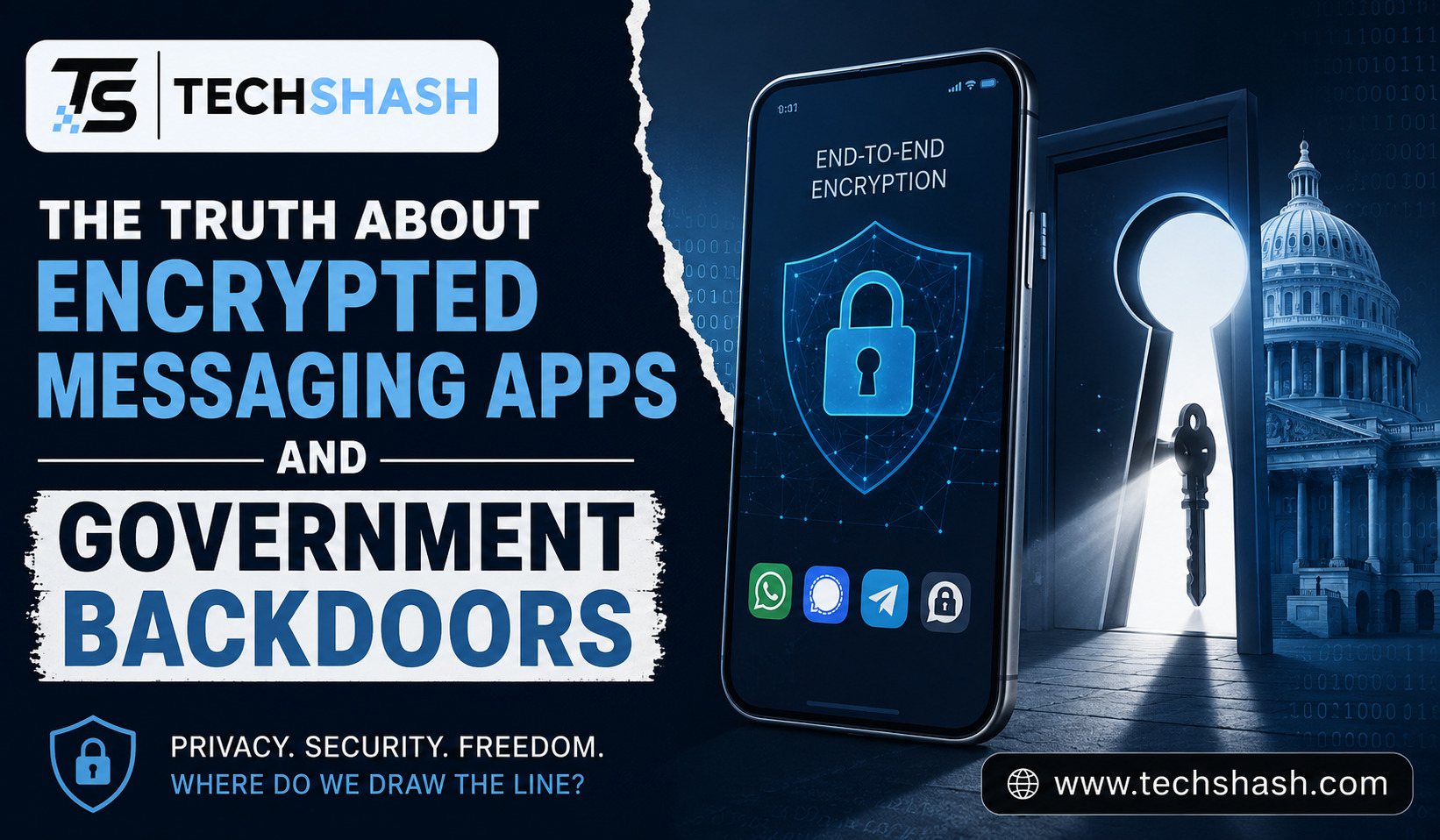
Many people send private messages every single day without thinking twice about who might read them. However, ongoing debates surrounding encrypted messaging apps and government backdoors show that digital privacy is under constant discussion across the globe.
Governments frequently claim that private channels hide criminal activity, while tech experts argue that securing messages keeps everyone safe. This detailed guide will examine how encrypted messaging apps and government backdoors interact, what backdoors mean for your data, and how surveillance proposals affect regular users.
1. Understanding End-to-End Encryption in Modern Communication
End-to-end encryption is a security method that scrambles messages while they travel from sender to recipient. Only the device sending the message and the device receiving the message hold the cryptographic keys needed to unlock the text.
As a result, no outside party can read the contents of the conversation while it moves across the internet. Even the company operating the messaging platform cannot view the readable text stored on its servers.
Key Characteristics of Secure Protocols
- Private key storage: Encryption keys stay strictly on personal smartphones or personal computers.
- Server opacity: Central servers only forward unreadable mathematical code from user to user.
- Forward secrecy: Temporary session keys change constantly so old messages remain protected if a key compromises.
Popular platforms like Signal, WhatsApp, and iMessage use end-to-end encryption to shield personal conversations. By keeping communications locked, these tools prevent hackers, network operators, and foreign agencies from spying on everyday users.
2. Why Governments Want Backdoors in Encrypted Messaging Apps
Law enforcement agencies and intelligence officials often view strong encryption as an obstacle to public safety. When criminal suspects communicate through locked channels, investigators call this scenario going dark.
Public officials argue that locked systems prevent them from solving serious crimes such as terrorism, human trafficking, and organized theft. Therefore, agencies ask technology companies to build special access mechanisms into their software.
Primary Reasons Given by Public Officials
- Criminal investigations: Gathering evidence against suspects who use private chat groups.
- National security: Monitoring potential threats before attacks occur inside national borders.
- Emergency situations: Responding quickly to active kidnapping cases or violent events.
Proponents of master access keys believe law enforcement needs special permission to inspect private digital communications. They state that court warrants should grant access to virtual communications just as physical search warrants allow searches inside private homes.
3. How Law Enforcement Currently Accesses Private Data
Even without built-in entry mechanisms, law enforcement agencies have multiple legal ways to gather digital evidence. Investigators rely on existing legal frameworks to gather information without breaking strong mathematical encryption.
Authorities regularly issue subpoenas and search warrants to tech firms for non-encrypted user data. Companies must comply with legal orders by handing over whatever records they legally retain.
Existing Legal Collection Methods
- Metadata collection: Authorities inspect who texted whom, exact timestamps, IP addresses, and user location data.
- Unencrypted cloud backups: Law enforcement requests chat backups stored on cloud servers without end-to-end protection.
- Physical device seizure: Police unlock confiscated phones directly using specialized forensics equipment.
Because metadata reveals personal networks and daily habits, investigators often piece together full cases without reading individual text messages. Cloud backups also remain one of the easiest ways for investigators to read historical chat histories.
4. The Technical Dangers of Building Encryption Backdoors
Cybersecurity experts almost universally agree that creating specialized master keys creates massive security risks. Mathematics does not distinguish between a law enforcement officer with a warrant and a malicious hacker.
If a software developer leaves a secret door open for government investigators, bad actors will eventually discover that same door. Once a structural vulnerability exists inside an application, a backdoor for one entity becomes a vulnerability for everyone.
Main Security Risks of Weakening Encryption
- Exploitation by hackers: Cybercriminals will locate master keys and steal sensitive banking or personal information.
- Foreign state espionage: Hostile foreign governments can discover structural entry points to spy on foreign citizens.
- Insider threats: Disgruntled employees at software companies could misuse special administrative access.
Building intentional flaws into secure code fundamentally undermines trust across the entire software ecosystem. Security specialists stress that you cannot weaken encryption solely for good actors without helping bad actors at the same time.
5. Client-Side Scanning and Alternative Surveillance Methods
As resistance against traditional entry doors grew, policy makers began proposing alternative methods like client-side scanning. Client-side scanning analyzes photos, videos, or text directly on your device before the app encrypts and sends the data.
If the software detects forbidden content, it alerts administrators or law enforcement authorities. While proponents describe this approach as a compromise, privacy advocates point out that it turns personal smartphones into automated surveillance devices.
Differences Between Traditional Backdoors and Device Scanning
- Traditional backdoors: Decrypt data while it moves across network infrastructure or central company servers.
- Client-side scanning: Checks file signatures directly on personal phones prior to outbound encryption.
- System monitoring: Scans local file storage continuously, using system battery power and local processing chips.
Critical thinkers note that client-side scanning breaks the core guarantee of end-to-end encryption. Once device-level scanning software sits on your phone, governments could expand the list of scanned content beyond serious crimes to include political speech or peaceful dissent.
6. Major Global Laws and Proposals Impacting Digital Privacy
Governments around the world are drafting legislation that forces technology providers to grant access to user communications. These bills often demand that platforms either scan content or provide readable formats to intelligence agencies upon request.
Different countries approach this issue through unique legislative initiatives, creating global tension between software developers and lawmakers. Some tech firms threaten to remove their services from entire countries rather than compromise user privacy.
Notable International Initiatives
- The EARN IT Act in the United States: Proposes changing legal protections for tech platforms unless they assist law enforcement access.
- Chat Control proposals in the European Union: Suggests mandatory automated scanning of private communications across all messaging apps.
- The Online Safety Act in the United Kingdom: Grants regulators power to demand content scanning inside encrypted channels.
These laws create serious operational challenges for software developers trying to maintain uniform global privacy standards. If a app provider weakens security to meet local laws in one country, users around the world could suffer lower security levels as a result.
7. Protecting Personal Security on Encrypted Platforms
Understanding how encrypted messaging apps and government backdoors interact empowers users to take control of their digital security. While individual users cannot control international legislation, everyone can adopt practical habits to protect personal communications.
Selecting platforms built on open-source code allows independent security researchers to verify that no secret entry paths exist. Taking simple precautions prevents data leaks from unencrypted storage locations or physical phone access.
Recommended Steps for Users
- Turn off unencrypted cloud backups: Ensure chat backups in application settings use end-to-end encryption or turn them off completely.
- Enable disappearing messages: Set messages to self-destruct automatically after a designated time frame.
- Lock physical devices: Use strong passcodes rather than simple four-digit codes or basic facial recognition.
- Keep software updated: Install system updates immediately so security patches protect against device-level exploits.
Combining trusted messaging platforms with basic personal security practices reduces exposure to unauthorized monitoring. Staying informed about privacy legislation ensures you can support digital rights initiatives in your local area.
Key Takeaways Box
- Core Encryption Function: End-to-end encryption locks data so only sender and receiver can read messages.
- The Backdoor Problem: Special entry doors designed for law enforcement can be found and abused by cybercriminals.
- Alternative Threats: Client-side scanning checks files on your phone before encryption occurs, weakening device privacy.
- Existing Access: Police can already access metadata, unencrypted cloud backups, and physically seized phones under legal warrants.
- Best Action: Users should disable plain cloud backups, use strong device passcodes, and keep apps fully updated.
FAQs
What is a government backdoor in messaging apps?
A government backdoor is a secret software mechanism designed to allow law enforcement or intelligence agencies to bypass encryption and read private communications.
Can messaging platforms read my encrypted texts?
Properly designed end-to-end encrypted messaging platforms cannot read your private text messages because the company does not hold the decryption keys.
Does metadata reveal what I write in a message?
Metadata reveals who you talk to, when you talk, and your general location, but it does not reveal the actual text content inside your encrypted messages.
Will building a backdoor weaken security for everyone?
Building a backdoor inevitably weakens overall security because any secret entry mechanism created for authorities can eventually be discovered and exploited by malicious hackers.
Is client-side scanning different from traditional encryption backdoors?
Client-side scanning analyzes files directly on your device before encryption occurs, whereas traditional backdoors decrypt messages while they travel across network servers.
Conclusion
The debate surrounding encrypted messaging apps and government backdoors balances legitimate public safety concerns against fundamental digital privacy rights. As world leaders push for legal entry access, security experts stress that weakening encryption creates unacceptable risks for internet users everywhere. By understanding these technical realities, turning off unencrypted cloud backups, and choosing open-source communication tools, citizens can maintain control over their personal information.