Introduction
A phone screen that folds in half used to feel like a bet you were taking on the manufacturer’s confidence, not your own. Early foldables cracked, creased badly, and scared off cautious buyers.
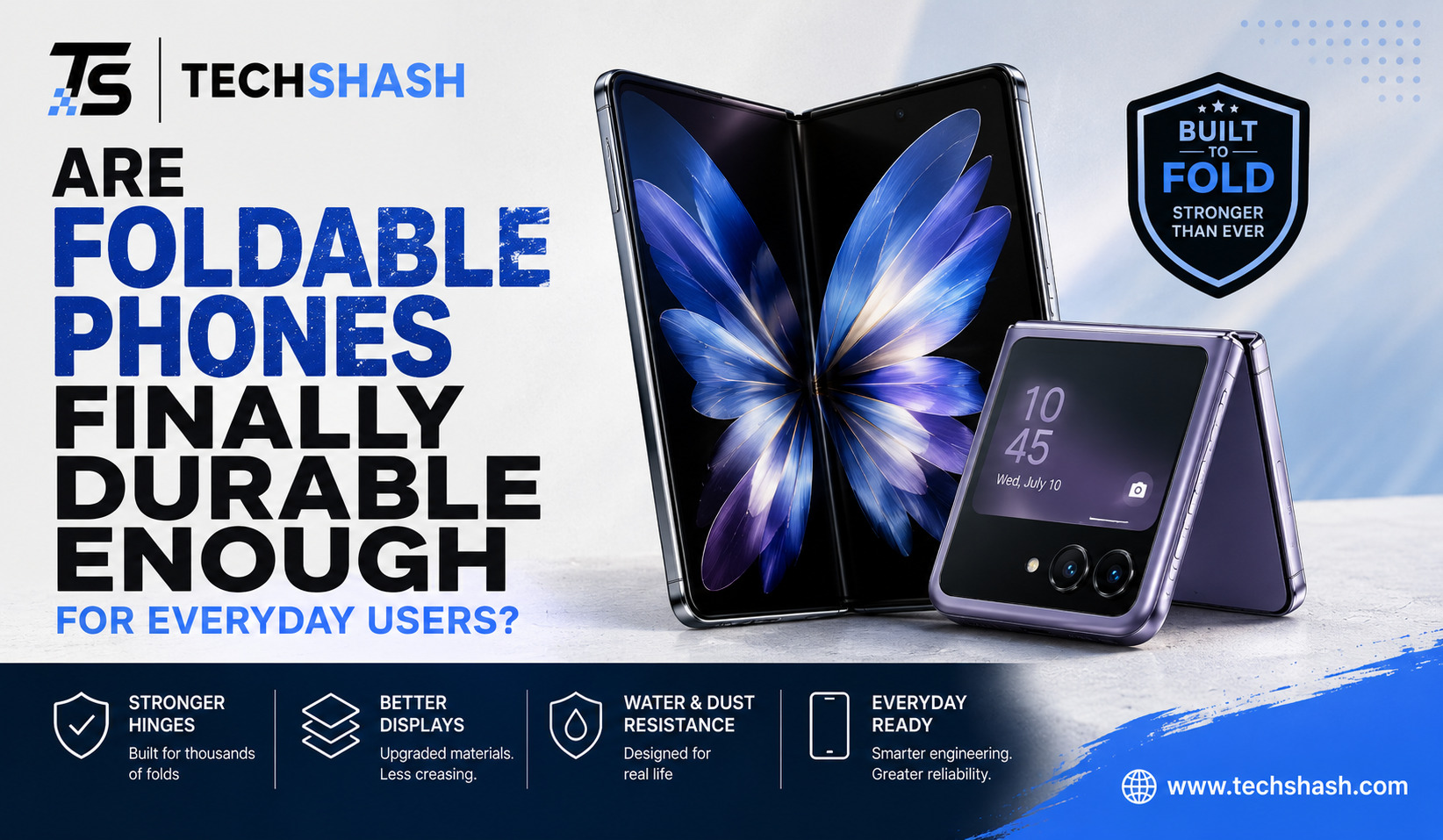
Foldable phone durability has come a long way since those first releases. This article looks at what has genuinely improved, what limitations remain, and whether an everyday user, not a tech reviewer, should feel comfortable buying one in 2026.
1. Why Durability Used to Be the Big Objection
The core worry with any foldable phone has always been simple: a phone with a hinge and a bendable screen has more moving parts and more potential failure points than a solid slab of glass and metal.
Early foldables reinforced that fear. Reports of screens creasing badly, hinges collecting dust, and displays failing after just months of daily folding gave the category a rough reputation that has taken years to shake off.
That reputation is genuinely outdated now, though it still shapes how a lot of buyers think about the category. The engineering has caught up considerably, even if some structural trade-offs remain baked into the design.
2. What Has Actually Changed in the Hinge
The hinge is the single most important part of a foldable phone’s durability story, and it has seen the most dramatic improvement.
Samsung’s Galaxy Z Fold7 and Z Flip7 are rated for 200,000 folds, roughly equal to 100 opens and closes every day for five years of normal use. Some newer devices push that figure even higher, with certain models and reviewers citing ratings above that baseline.
One especially notable jump: Samsung’s own data reportedly shows the Galaxy Z Fold 7’s hinge rated for roughly a decade of average daily use before failure becomes a real concern, a clear leap forward from the Z Fold 6’s 200,000-fold rating.
Reviewers consistently describe newer hinges as smoother, thinner, and better at spreading pressure evenly across the inner display, which reduces the stress concentrated right at the fold line.
3. Water and Dust Resistance Have Caught Up
Water resistance has become close to standard across premium foldables, though dust protection has taken longer to catch up.
Most current foldables carry an IPX8 rating, meaning they have been tested for water resistance, but the X in that rating means dust protection was not officially tested at all. That gap matters more than it sounds, since fine dust and pocket lint entering the hinge mechanism remains one of the more common real-world failure points.
A few models have closed that gap entirely. The Pixel 10 Pro Fold became the first foldable with full IP68 dust and water resistance, removing one of the longest-standing durability concerns in the category. The Huawei Mate X7 has followed with its own combined IP58 and IP59 protection along with reinforced internal materials.
4. The Crease Problem, Explained Honestly
The crease at the center of a foldable screen is still there on every current model, and it is worth being upfront about that. It comes from the nature of a flexible display, not from a manufacturing defect.
The good news is that reinforced ultra-thin glass layers now sit over the flexible display on most current models, making the screen more resistant to everyday wear while also helping reduce how visible the crease appears over time.
In practice, most reviewers and long-term owners describe the crease as something you stop noticing during regular use. It shows up at certain angles or under specific lighting, but it does not interfere with touch response, and it does not get worse simply from normal folding over time.
5. How Today’s Top Models Compare
Not every foldable handles durability the same way, and the differences are worth knowing before you buy.
- Samsung Galaxy Z Fold 7: Strong hinge durability and mature software optimization, though its IP48 rating leaves it more vulnerable to fine dust than some competitors.
- Google Pixel 10 Pro Fold: The durability leader on paper, with full IP68 protection against both dust and water.
- Huawei Mate X7: Combines IP58 and IP59 ratings with reinforced materials, positioning it as a strong durability option outside the more familiar US brands.
- OnePlus Open 2: Trades some software polish for a larger battery and faster charging, while still competing closely on hinge durability.
Apple is reportedly entering the category for the first time with an iPhone Fold, aiming to reduce crease visibility through new hinge and display technology, though its actual durability numbers remain unconfirmed ahead of launch.
6. What Still Breaks on a Foldable Phone
Even with real progress, foldables remain more fragile in specific ways than a traditional slab phone.
The inner display uses flexible plastic rather than glass, which means it scratches more easily than a conventional screen, even with a reinforced protective layer on top. Owners are generally advised to avoid pressing hard on the inner screen or setting anything sharp on top of it.
Dust remains a bigger practical threat than most people expect. Even phones with strong fold ratings can develop a “crunchier” feel to their hinge mechanism if debris works its way in over time, and that buildup can eventually cause permanent damage if left unaddressed.
Impact damage also tends to hit foldables harder than a standard phone, since the internal display stack involves more layers and more components that can shift or crack under a hard drop.
7. Repair Costs and What They Mean Long Term
Repair costs remain one of the clearest downsides to foldable ownership. The inner display and hinge assembly count as specialized components, which pushes repair prices well above what a typical slab-phone screen replacement costs.
Many repair shops treat foldable screen repairs as a distinct service category entirely, separate from standard smartphone repair work, due to the complexity involved.
This is where right to repair trends intersect with the foldable conversation. As more states require manufacturers to share parts and documentation, foldable repair costs may gradually come down, though that shift has not fully reached this newer, more complex phone category yet.
8. So, Are They Ready for Everyday Use?
For most people, the honest answer is yes, with a few reasonable caveats. Hinge durability, water resistance, and crease visibility have all improved enough that a foldable no longer feels like a fragile experiment.
The remaining trade-offs are real but manageable: keep the phone closed when not actively using it, be mindful of dust exposure, and budget for higher repair costs if something does go wrong down the line.
If you want the most complete peace of mind on durability specifically, models with full dust and water resistance, like the Pixel 10 Pro Fold, currently lead the pack. If software polish and app support matter more to your daily use, Samsung’s Galaxy Z Fold 7 remains the more mature overall experience, even with a slightly lower dust rating.
Key Takeaways
- Hinge improvement: Current top models are rated for 200,000 or more folds, with some now rated for roughly a decade of daily use.
- Water and dust: Most foldables carry water resistance, but the Pixel 10 Pro Fold is the first with full dust and water protection.
- The crease: It does not disappear, but reinforced glass layers have made it less visible and less noticeable in daily use.
- Remaining weak point: The flexible inner display still scratches more easily than standard glass and remains the most fragile part.
- Cost consideration: Foldable repairs cost significantly more than standard phone repairs due to specialized hinge and display components.
FAQs
Do foldable phone hinges wear out over time? Yes, every fold cycle contributes to gradual hinge wear, though current models are rated for hundreds of thousands of folds before failure becomes a concern.
Which foldable phone has the best durability rating right now? The Google Pixel 10 Pro Fold currently leads on paper as the first foldable with full IP68 dust and water resistance.
Does the crease on a foldable screen get worse over time? No, the crease does not deepen with normal use, though it remains visible at certain angles on every current foldable model.
Are foldable phone repairs more expensive than regular phone repairs? Yes, foldable repairs generally cost more because the inner display and hinge require specialized parts and servicing.
Can foldable phones survive being dropped? They are more vulnerable to impact damage than standard phones, since the internal display stack involves more layers and moving parts that can shift or crack.
Conclusion
Foldable phones have moved a long way past their fragile early reputation, with stronger hinges, better water resistance, and less noticeable creases across nearly every current model. They are not yet as tough as a traditional slab phone, and dust exposure along with higher repair costs remain real considerations. Even so, for everyday users willing to accept those trade-offs, foldable phones in 2026 have genuinely earned a spot as a reliable daily driver rather than a risky experiment.