Introduction
Smartphone fans around the globe are looking ahead to what might be the biggest mobile release of the decade. Apple changed the mobile world forever when Steve Jobs presented the first iPhone in June 2007. Fast forward two decades, and the company is preparing to celebrate that monumental occasion.
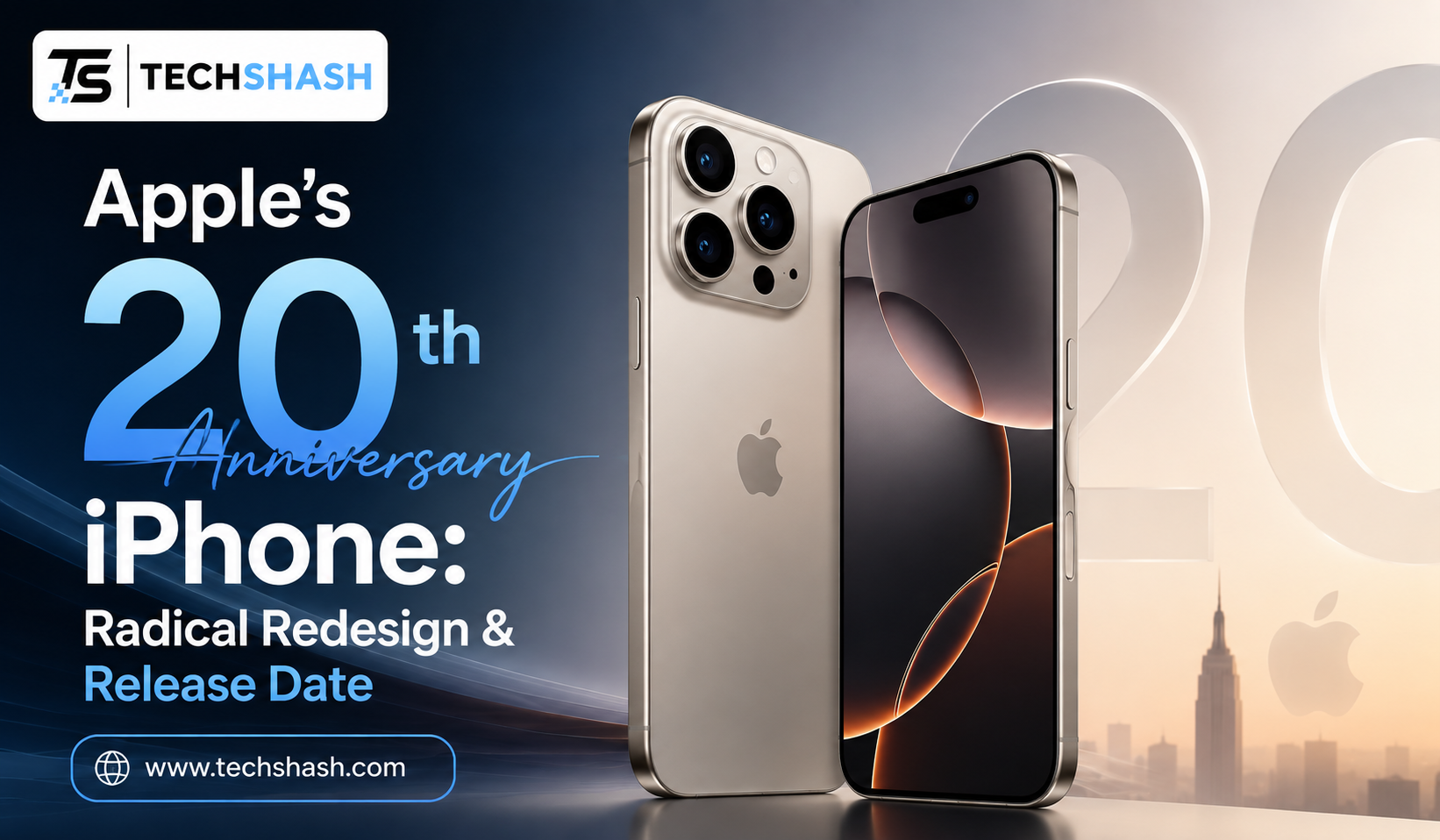
Rumors and supply chain reports suggest that the Apple 20th anniversary iPhone will feature a dramatic redesign unlike anything seen in recent years. Instead of minor yearly updates, this celebratory model aims to set a brand new benchmark for mobile hardware.
In this article, you will learn everything about the anticipated release schedule, leaked design changes, camera upgrades, and advanced display technology. Every detail is based on current supply chain developments and verified industry reports.
1. The History and Significance of the 20th Anniversary Milestone
Ten years after the original device hit store shelves, Apple surprised the world with the iPhone X. That model introduced a borderless screen, removed the iconic home button, and brought Face ID into everyday use. It marked a brand new era for smartphone aesthetics.
Now, as the twenty-year mark approaches, expectations are exceptionally high once again. Consumers and tech experts want to see another massive leap forward rather than small iterative changes.
Apple recognizes the weight of major anniversary dates. The development teams in Cupertino are working on groundbreaking techniques to ensure this specific model leaves a lasting mark on history. The anniversary milestone acts as a driver for bold design choices that might otherwise take years to reach consumers.
Why Anniversary Models Matter
Anniversary releases allow engineers to push experimental technology into mass production. When a company marks two decades of a flagship product, budget limits and conventional design constraints often move to the side.
- Celebrating two decades of mobile innovation.
- Setting the technological foundation for the next ten years.
- Introducing manufacturing techniques that define future smartphones.
2. Expected Release Date for the Apple 20th Anniversary iPhone
Many consumers wonder exactly when this commemorative device will hit store shelves. The original iPhone debuted in the summer of 2007, making 2027 the official twentieth anniversary year.
Industry analysts and supply chain leaks point to a launch in the fall of 2027 for the Apple 20th anniversary iPhone. Apple historically holds its flagship mobile announcements during September, and this special project should follow that standard schedule.
While regular annual updates will continue leading up to that year, this specific model will serve as the center point of Apple’s 2027 hardware showcase. Production scheduling indicates that key component suppliers are already modifying assembly lines to prepare for high-volume manufacturing well in advance.
Understanding the Release Schedule
Apple follows a strict multi-year hardware timeline. Preparing advanced materials takes years of research before final assembly begins.
- Early Research Phase: Manufacturing processes tested on interim models like ultra-thin concept devices.
- Supply Chain Adaptation: Renovating factory equipment to produce custom glass shapes.
- Official Debut: Autumn 2027 public announcement alongside accessory lines.
3. A Radical Curved Glass Design Shake-Up
Recent generations of smartphones have relied heavily on flat metal frames and straight glass panels. Reports indicate that the Apple 20th anniversary iPhone will break away from this boxy look completely.
Leaked renders and supply chain posts suggest a shift toward an all-glass curved body that wraps around the sides of the device. This approach will create the visual effect of a single continuous piece of polished glass without harsh metal borders.
Manufacturing facilities are reportedly adapting production techniques developed for ultra-thin phone chassis to create soft, rounded glass edges. The front panel may feature curves along all four borders, offering a comfortable feel in the hand while eliminating traditional screen margins.
Key Changes to Exterior Construction
Moving from flat edges back to smooth contours represents a major shift in physical design. Users can expect a phone that looks smooth from every angle.
- Quad-curved front display panel wrapping over all four edges.
- Curved back glass that integrates seamlessly into the side frame.
- Significant reduction in visible bezel thickness around the active screen area.
4. Display Upgrades and Under-Display Face ID
Screen quality remains one of the most vital components of any flagship mobile device. For this special release, engineers are working to eliminate display cutouts entirely.
The current Dynamic Island notch may be replaced by an advanced under-display Face ID system hidden beneath the screen pixels. Infrared sensors and projection modules will read facial features directly through the display layer without blocking visible content.
Additionally, Apple is exploring polarizer-less OLED technology. Removing the traditional polarizing film allows the screen to transmit light more efficiently while remaining exceptionally thin. This reduction in thickness directly contributes to a lighter device overall.
5. Internal Hardware and Performance Enhancements
A radical external transformation requires equally capable internal components. The Apple 20th anniversary iPhone will run on next-generation custom silicon designed to handle heavy computational tasks.
The upcoming A21 processor will likely power the device, built on an advanced sub-three-nanometer manufacturing node. This tiny chip footprint grants incredible processing speed while consuming less battery power during intense daily tasks.
Engineers are also adding high bandwidth memory configurations to process local artificial intelligence models directly on the chip. This extra memory bandwidth ensures that voice commands, image editing, and predictive tasks happen almost instantly without requiring an active internet connection.
Hardware Upgrades at a Glance
Performance upgrades will extend across all core processing units. System memory and power delivery will see matching improvements.
- Next-generation custom Apple silicon tailored for on-device machine learning.
- Higher bandwidth unified memory for fast computational processing.
- Solid-state haptic volume buttons that replace mechanical moving parts.
6. Camera Innovations and Rear Module Changes
Mobile photography has evolved rapidly, and the rear panel of this new device will reflect that progress. Early render leaks suggest a complete redesign of the camera module on the back.
Instead of a large square camera bump in one corner, the Apple 20th anniversary iPhone may feature a horizontal camera layout aligned along the top portion of the rear panel. This horizontal arrangement allows for larger sensors while keeping the device stable when laid flat on a desk.
Custom image sensors developed in-house will improve low-light capture and color accuracy. Combined with advanced software algorithms, the camera system will produce photos with rich detail without needing heavy digital processing masks.
Photography and Video Enhancements
Sensor improvements will transform how the device captures images in difficult lighting conditions. The layout change also provides functional benefits.
- Horizontal camera placement to reduce rocking on flat surfaces.
- Custom-designed image sensors for sharper detail and natural colors.
- Enhanced depth mapping for realistic portrait photography effects.
7. Heat Management and Ultra-Thin Frame Engineering
Creating an extremely thin phone out of curved glass creates tough thermal management challenges. Fast processors generate significant heat, which must escape quickly to prevent performance slowdowns.
To solve this issue, Apple is designing an expanded vapor chamber cooling plate that sits directly between the internal circuit board and the outer glass shell. This plate is significantly larger than cooling elements used in previous generations.
The custom cooling system spreads internal heat evenly across the back glass surface. This efficient heat dissipation allows the device to stay thin—potentially measuring under six millimeters—while maintaining maximum processing speeds during long gaming or video editing sessions.
Thermal Solutions for Thin Devices
Keeping internal parts cool protects long-term battery health and overall stability.
- Larger Vapor Chamber: Spreads heat away from core chips quickly.
- Glass Thermal Coupling: Uses outer materials to diffuse thermal energy safely.
- Thinner Internal Stacking: Compact circuit layouts leave room for passive airflow.
Key Takeaways
- Target Launch Window: Expected in the fall of 2027 to mark twenty years since the original iPhone release.
- Exterior Design: Features a quad-curved glass body that wraps around edges for a seamless look.
- Display Innovations: Uses an under-display Face ID system to create a uninterrupted screen area.
- Internal Performance: Driven by a custom A21 processor paired with high bandwidth memory.
- Camera Realignment: Uses a horizontal rear camera array with custom-built image sensors.
- Cooling Engineering: Employs an enlarged vapor chamber plate for efficient heat management in a thin frame.
Frequently Asked Questions
When will the Apple 20th anniversary iPhone officially be released?
Apple is expected to announce and release the Apple 20th anniversary iPhone during its standard autumn product launch in 2027.
Will the 20th anniversary iPhone feature a completely new design?
Yes, leaks indicate that the device will move away from flat sides in favor of an all-glass curved body that wraps around the front and back edges.
What will happen to the Dynamic Island on the new display?
Engineers plan to move Face ID components beneath the display glass to eliminate screen cutouts and create an uninterrupted screen layout.
How thin will the 20th anniversary iPhone be?
Reports suggest that manufacturing processes inspired by ultra-thin concept models could keep the body profile extremely slim while using an enlarged vapor chamber for cooling.
Will the camera layout on the back change on this model?
Leaked renders show a shift toward a horizontal dual-camera alignment across the upper back of the phone rather than a square corner bump.
Conclusion
The upcoming Apple 20th anniversary iPhone promises to be one of the most exciting mobile hardware updates in recent memory. By combining a quad-curved glass body, under-display Face ID technology, an updated horizontal camera system, and an advanced A21 processor, Apple is preparing to redefine the smartphone user experience once again. As 2027 approaches, supply chain reports continue to reveal how this ambitious device will merge ultra-thin engineering with top-tier performance.