Introduction
Buying a new television, monitor, or smartphone presents consumers with a confusing array of screen options. When shoppers research OLED vs Mini-LED vs Micro-OLED, they often find technical specifications that obscure real-world performance differences. Understanding how each display panel comparison works helps you make an informed purchase without wasting money on marketing hype. This guide breaks down the core differences between these three advanced screen technology types so you can pick the ideal display for your setup.
1. Understanding Modern Display Technologies
Display technology has evolved rapidly over the past decade. Manufacturers constantly introduce new terms to describe improvements in visual clarity and brightness. Knowing the basics helps you evaluate specifications accurately.
The Evolution of Pixels
Older screens relied on large fluorescent tubes or basic light-emitting diodes to illuminate entire panels at once. Modern panels use advanced microscopic light sources or self-emitting pixels to control illumination with extreme precision. Precise pixel control is the primary driver behind modern visual quality.
Why Panel Choice Matters
Your screen dictates your entire visual experience whether you play video games, edit photos, or watch movies. Choosing the wrong panel type leads to eye strain, washed-out colors, or poor contrast during dark scenes. Evaluating your environment and usage habits ensures you select hardware that matches your daily needs.
2. Core Mechanics of OLED Screens
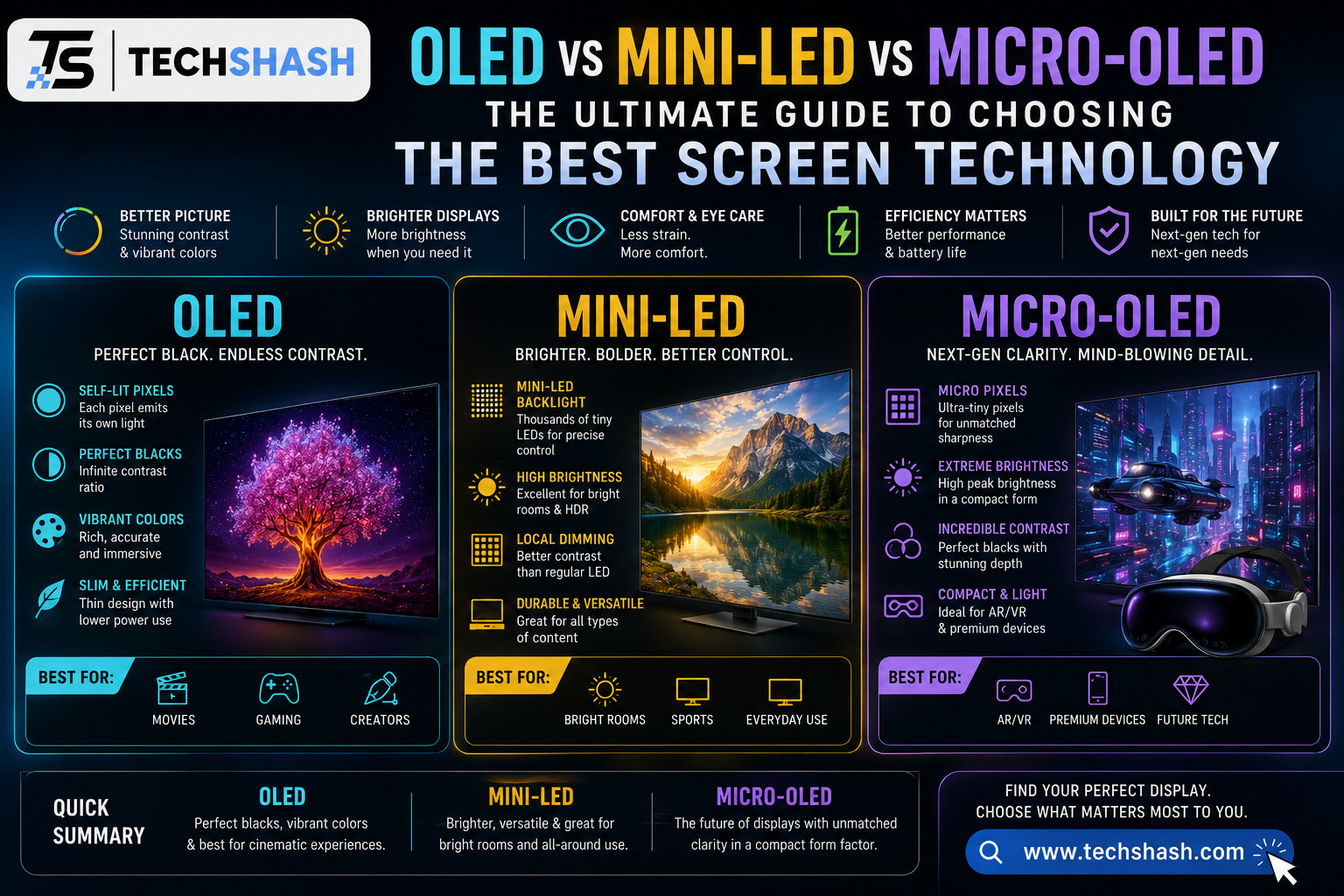
Organic Light Emitting Diode technology has dominated high-end televisions and smartphones for years. Each individual pixel in an organic panel generates its own light and color independently. This unique design eliminates the need for a separate backlight entirely.
True Blacks and Infinite Contrast
Because individual pixels turn completely off when displaying black, organic screens achieve true black levels. This capability creates infinite contrast ratios that make images pop with stunning depth. Infinite contrast ratios provide a cinematic viewing experience in dark rooms.
Viewing Angles and Response Times
Organic panels offer exceptionally wide viewing angles without any color distortion or brightness loss from the sides. Furthermore, organic pixels react almost instantly to electrical signals. This lightning-fast panel response time prevents motion blur during fast-moving action sequences or competitive video games.
3. Exploring Mini-LED Display Capabilities
Mini-LED technology represents a massive leap forward for traditional liquid crystal displays. Instead of using a single large backlight, a Mini-LED screen uses thousands of tiny microscopic diodes behind the liquid crystal layer. These tiny diodes are organized into hundreds of independent dimming zones.
Local Dimming Zones Explained
Local dimming allows the television or monitor to brighten specific areas of the screen while keeping other areas dark. While it cannot match the pixel-level control of organic diodes, high-end Mini-LED panels reduce halo effects significantly. Local dimming zones bridge the gap between liquid crystal displays and self-emitting panels.
Peak Brightness Advantages
Liquid crystal panels excel at producing exceptionally high light output compared to organic alternatives. Mini-LED screens push this advantage even further by driving thousands of tiny diodes to maximum intensity. This high luminance capability makes Mini-LED ideal for brightly lit rooms and vibrant HDR visual quality.
4. The Rise of Micro-OLED Technology
Micro-OLED represents a specialized evolution designed specifically for compact near-eye displays. Instead of using a traditional glass substrate, manufacturers build these organic pixels directly onto silicon wafers. This silicon-based architecture allows for incredible pixel densities on screens smaller than a postage stamp.
Ultra-High Pixel Density
Virtual reality headsets and augmented reality glasses demand microscopic pixels to prevent screen-door effects. Micro-OLED panels pack millions of pixels into tiny spaces, resulting in astonishingly sharp imagery. Ultra-high pixel density enables crystal-clear text and graphics in wearable devices.
Current Applications and Limitations
You will find Micro-OLED primarily in premium virtual reality headsets and advanced electronic viewfinders. Manufacturing silicon-based organic panels remains extremely expensive and difficult at scale. Consequently, prices for these micro-displays stay very high compared to standard consumer televisions.
5. Comparing Brightness, Contrast, and Color Accuracy
Evaluating screens side by side reveals distinct performance trade-offs between each technology. Brightness measures how much light a panel can emit, while contrast measures the difference between brightest whites and darkest blacks. Color accuracy ensures images match what creators originally intended.
Luminance and Room Lighting
Mini-LED screens win the raw brightness competition easily. They shine brilliantly in sunlit living rooms where organic panels might look slightly dim. Conversely, organic panels excel in controlled lighting environments where absolute black levels matter more than maximum luminance.
Color Gamut and Purity
Both organic technologies and advanced liquid crystal displays cover wide color gamuts accurately. Organic pixels produce pure, saturated colors without bleeding light into adjacent areas. Superior color purity ensures skin tones and natural scenery look authentic and lifelike.
6. Power Consumption and Durability Factors
Energy efficiency and hardware longevity influence long-term satisfaction significantly. Different screen designs consume power differently depending on the content currently displayed on screen. Understanding hardware durability prevents unexpected failures over years of heavy usage.
Energy Usage Patterns
Organic screens consume power based on how many pixels are lit and how bright those pixels are. Watching dark scenes uses very little electricity, while displaying a bright white webpage draws substantial power. Mini-LED panels draw steady power for their backlights regardless of what is on screen.
Burn-In Risks and Lifespan
Organic pixels degrade slowly over thousands of hours of continuous operation, creating potential burn-in risks for static user interfaces. Liquid crystal and Mini-LED panels do not suffer from organic degradation, making them safer for static office work or security monitoring. Long-term hardware durability remains a strong selling point for liquid crystal variations.
7. Making the Right Choice for Your Specific Needs
Selecting the best display requires balancing your budget, viewing environment, and primary tasks. Gamers, movie enthusiasts, and office workers prioritize different hardware attributes. Reviewing your personal preferences simplifies the final purchasing decision.
Best Scenarios for Each Option
Choose an organic panel if you watch movies in dim rooms and demand perfect black levels. Pick a Mini-LED screen if you need blinding brightness for a sunlit room or work with static windows all day. Consider Micro-OLED only if you purchase cutting-edge virtual reality hardware.
Balancing Cost and Performance
High-end hardware always commands a financial premium in the consumer electronics market. Determine your strict budget limit before comparing technical specifications. Smart budget allocation ensures you buy a display that satisfies your requirements without financial regret.
Key Takeaways Box
- Primary screen comparison: OLED vs Mini-LED vs Micro-OLED represent distinct engineering approaches to illumination and pixel control.
- Contrast champion: Organic technology delivers unmatched black levels and infinite contrast for cinematic viewing.
- Brightness leader: Mini-LED displays provide exceptional luminance and local dimming for brightly lit spaces.
- Wearable pioneer: Micro-OLED achieves microscopic pixel densities for advanced virtual reality headsets.
- Durability consideration: Liquid crystal variants avoid organic degradation issues during long-term static usage.
FAQs
What is the primary difference between organic and liquid crystal displays?
Organic panels emit their own light per pixel, while liquid crystal panels require a separate backlight behind the glass.
Can Mini-LED screens achieve true black levels like organic panels?
Mini-LED displays offer deep blacks through local dimming, but they cannot match the absolute pixel-level darkness of organic screens.
Why are Micro-OLED screens used primarily in virtual reality headsets?
Micro-OLED panels pack millions of microscopic pixels onto silicon wafers to eliminate visible pixel grids in near-eye optics.
Which screen technology is best for a bright living room?
Mini-LED displays provide superior peak brightness that easily overcomes strong ambient sunlight in brightly lit rooms.
Do organic screens suffer from permanent burn-in over time?
Organic panels can experience image retention or burn-in if static bright elements remain displayed continuously for thousands of hours.
Conclusion
Choosing the right screen technology depends entirely on your environment, viewing habits, and budget. Whether you prefer cinematic contrast or peak brightness, understanding OLED vs Mini-LED vs Micro-OLED options ensures you make the right choice. Evaluating these factors carefully guarantees that your new display delivers exceptional visual satisfaction for years to come.