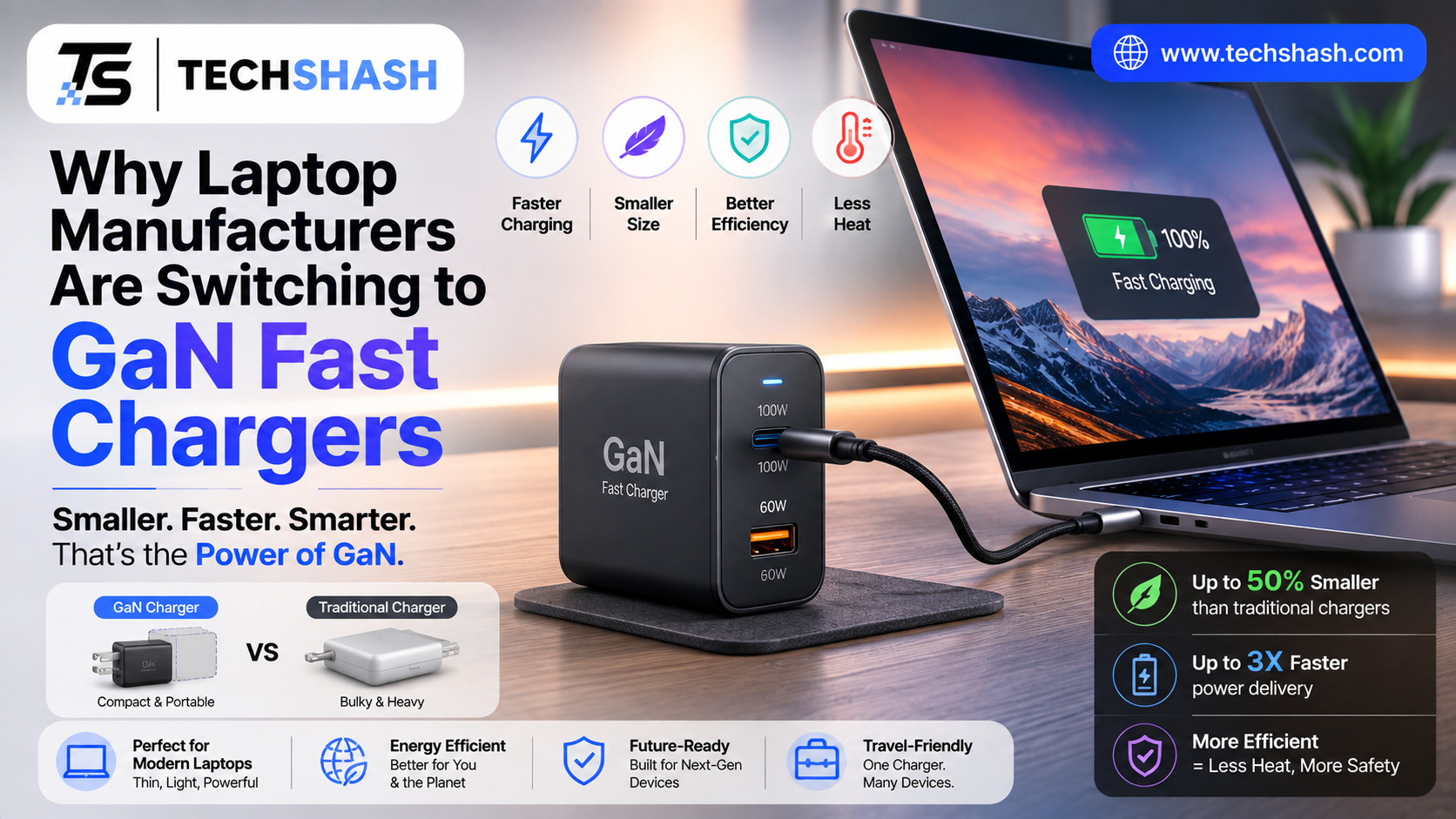
Carrying a heavy power brick inside a backpack feels outdated in an era of ultra-thin laptops. Power adapters remained large, heavy, and awkward to carry for decades while notebooks became sleeker every year.
Major technology companies now rely on GaN fast chargers to solve this persistent power problem. These modern power supplies deliver high wattage without adding unnecessary bulk to travel bags or work desks.
Laptop fast charging requires high electrical efficiency to keep devices powered throughout demanding workdays. This detailed guide explains why laptop manufacturers are switching to GaN fast chargers and how this technology transforms daily computing experiences for users everywhere.
1. Understanding Gallium Nitride and How It Beats Silicon
For over fifty years, silicon served as the primary material for semiconductors inside electronic power supplies. Silicon chips handled basic power conversion well enough for older electronics. However, traditional silicon reaches physical limits when converting high amounts of electrical energy in small spaces.
Gallium nitride represents a major material advancement over standard silicon components. Engineers classify gallium nitride as a wide-bandgap semiconductor. This property means electricity moves through the material at higher energy levels without producing excessive heat.
Many laptop makers now prefer GaN fast chargers over older silicon models because of these chemical advantages. The chemical structure of gallium nitride handles higher electrical charges much faster than traditional silicon power blocks.
Higher Frequency Switching
Standard silicon power blocks switch electrical current on and off thousands of times per second. Gallium nitride power components switch electrical current millions of times per second instead. High switching frequencies mean internal components like transformers and capacitors can shrink dramatically in physical size.
Superior Bandgap Efficiency
A material with a wide bandgap allows electrons to jump between energy states more easily. Gallium nitride features a 3.4 electron-volt bandgap compared to the 1.1 electron-volt bandgap of standard silicon. Higher bandgap levels allow the material to sustain higher voltage thresholds without breaking down under heavy electrical stress.
Power conversion efficiency increases when current moves through a smaller physical space with minimal resistance. Silicon chargers lose significant energy during conversion, turning that lost energy directly into heat. Gallium nitride minimizes these energy losses, ensuring that more power reaches the laptop battery efficiently.
2. How Smaller Sizes and Lower Weight Benefit Modern Laptops
Computer hardware design focuses on portability and physical reduction. Modern notebooks weigh under three pounds and fit inside thin sleeve cases. Packing a thick, heavy power brick alongside a lightweight computer defeats the purpose of buying a portable device.
Swapping silicon components for gallium nitride allows manufacturers to produce compact GaN fast chargers that weigh half as much as older power bricks. Users can slip these tiny blocks into a pocket or small bag compartment without adding noticeable strain.
Travelers appreciate how GaN fast chargers fit easily into tiny bag compartments alongside other travel gear. Carrying smaller power accessories makes mobile work far more convenient for frequent commuters.
Portability and Travel Convenience
Travelers frequently struggle with bulky charging bricks that block adjacent wall outlets in airports or coffee shops. Compact chargers feature foldable wall prongs and slender shapes that fit neatly into tight power strips. Carrying one lightweight brick for a laptop simplifies travel packing for professionals.
Reduced Space in Desktop Setups
Home offices and corporate cubicles benefit from cleaner cable management. Small power bricks free up space behind desks and inside cable organizer boxes. Dropping total power adapter volume by up to fifty percent smaller footprint gives consumers cleaner workspace setups without sacrificing charging speed.
Lighter chargers also put less physical stress on wall sockets. Heavy silicon bricks often pull themselves out of loose electrical outlets due to gravity. Smaller chargers stay plugged in securely, preventing accidental power drops during critical work tasks.
3. Thermal Efficiency and Reduced Heat Generation
Heat creation remains the primary enemy of electrical efficiency and hardware longevity. Silicon power bricks become uncomfortably hot to the touch during intense battery charging sessions. Excess heat damages internal components over time and reduces overall power output.
Modern GaN fast chargers generate minimal heat during heavy battery charging sessions. Gallium nitride components exhibit lower electrical resistance when current flows through the internal circuitry.
Cool operation allows GaN fast chargers to maintain high efficiency over long periods of continuous operation. Less thermal stress protects internal circuits and ensures reliable power delivery to connected computers.
Reduced Internal Cooling Requirements
Because silicon components get very hot, manufacturers must surround them with thick heatsinks and heat-dissipating insulation. These cooling elements add significant weight and volume to the power supply. Lower heat output eliminates the need for massive internal heatsinks inside the charger casing.
Prolonged Component Lifespan
Lower operating temperatures preserve internal components like capacitors and safety circuits over years of daily use. Chargers that run cool experience less thermal stress, reducing hardware failure rates significantly. Users enjoy safer charging conditions that protect expensive laptops from unexpected power surges or overheating incidents.
Cooler operation allows manufacturers to enclose high-wattage power circuits inside sealed plastic shells without adding ventilation holes. Dust and moisture cannot enter sealed casings as easily, improving physical durability across different environments.
4. Higher Power Delivery and Universal USB-C Standards
Modern laptops demand more power than older portable devices ever required. Fast charging protocols allow thin laptops to receive sixty-five, one hundred, or even two hundred watts of continuous power. High wattage requires advanced hardware capable of handling heavy electrical throughput safely.
Combining gallium nitride with power standards makes GaN fast chargers versatile power supplies across different hardware ecosystems. A single charger can power a high-end laptop, a smartphone, and wireless headphones at their maximum speeds.
Users can power multiple devices using GaN fast chargers with multi-port outputs without cluttering their desks. Intelligent power routing ensures each device receives the correct wattage safely.
Single Charger for Multiple Devices
Multiple output ports allow users to charge several gadgets at the exact same time from one wall outlet. Intelligent power distribution chips detect connected devices and adjust wattage automatically for each output port. A single sixty-five-watt brick can split power between a laptop and a phone without overheating.
Higher Wattage in Standard Sizes
High-performance gaming laptops previously required huge power bricks that weighed several pounds. USB-C Power Delivery 3.1 standards support charging power up to two hundred forty watts over a single cable. Gallium nitride technology allows manufacturers to pack high-wattage power supplies into cases that fit in one hand.
Universal standards eliminate proprietary charging barrels that locked users into single-brand ecosystems. Customers can purchase one quality charger that works across Windows, Mac, and Chrome OS devices smoothly.
5. Environmental Impact and Reduced Electronic Waste
Electronic waste represents a growing environmental crisis across the globe. Millions of proprietary laptop chargers end up in landfills whenever consumers replace old computers. Standardizing power hardware helps lower this environmental burden over time.
Replacing traditional power supplies with GaN fast chargers reduces electricity waste at the power socket. Gallium nitride technology reduces energy conversion losses, ensuring higher efficiency ratings across billions of daily charging hours.
The wide adoption of GaN fast chargers supports global sustainability goals by reducing plastic and metal usage in factory production. Smaller hardware requires fewer resources to produce and ship across international logistics networks.
Less Raw Material Consumption
Building smaller chargers requires fewer plastic polymers, copper wires, and aluminum heatsinks per unit. Manufacturing smaller power adapters reduces the raw material footprint required during industrial production cycles. Lower material requirements decrease carbon emissions across global supply chains and shipping operations.
Reduced Electronic Waste Volume
Universal USB-C compatibility allows consumers to reuse existing power adapters across multiple laptop upgrades. People no longer need to throw away a working charger simply because they bought a new computer brand. Electronic waste reduction protects local ecosystems by keeping functional electrical hardware out of garbage dumps.
Lower electricity consumption during daily charging cycles adds up across millions of active laptops worldwide. Energy grid demands drop slightly when millions of users switch to higher-efficiency power blocks.
6. Decreasing Production Costs and Market Adoption
New semiconductor materials start with high production costs due to complex manufacturing processes. Early gallium nitride components were expensive to produce, limiting their use to premium aftermarket accessories. Initial factory yield rates kept overall unit prices high for several years.
Decreasing hardware component costs allows OEMs to ship GaN fast chargers with mid-range notebooks without raising retail prices significantly. Higher production yields allow factories to produce gallium nitride wafers at costs competitive with traditional silicon processing lines.
Retail boxes now frequently include GaN fast chargers as standard accessories across major computer manufacturers. Consumers no longer need to buy separate third-party power adapters to get fast charging speeds in small form factors.
Economies of Scale in Manufacturing
As major tech brands ordered millions of units, factory production scaled up rapidly. Volume manufacturing drives down the per-unit cost of specialized components across supply chains. Improved manufacturing yields make gallium nitride components affordable for entry-level laptop models today.
OEM Integration across Laptop Lines
Major laptop brands now include these power supplies directly inside retail product boxes. Inexpensive mid-range laptops now ship with compact power blocks instead of cheap silicon bricks. Lower production costs ensure that fast power delivery becomes a standard feature rather than an expensive upgrade.
7. What GaN Fast Chargers Mean for the Future of Mobile Computing
The shift toward modern power delivery marks an important milestone in mobile hardware design. Laptops continue to push power limits with brighter screens and faster processors while power supplies grow smaller.
Modern laptops will continue to rely on GaN fast chargers as computing demands grow and physical device designs become thinner. Integrating efficient power conversion hardware allows computer engineers to design creative form factors for future notebooks.
Future developments will integrate power conversion components directly onto laptop motherboards or internal battery modules. Compact internal circuits will allow laptop makers to shrink device chassis sizes even further.
Unified Power Delivery Standard
Universal charging standards will eventually make single-purpose power bricks completely obsolete across all consumer tech. Users will carry one tiny power source to run all personal electronics, from laptops to digital cameras. A unified power delivery standard simplifies user experiences while reducing corporate manufacturing costs.
Growth in High-Wattage Mobile Devices
Mobile workstations and gaming computers will benefit most from future power developments. Designers can build powerful portable machines without forcing users to carry giant power bricks. Mobile power solutions will continue to match the growing energy demands of advanced laptop hardware.
Key Takeaways
- Material Superiority: Gallium nitride handles higher voltage and switches faster than traditional silicon components.
- Compact Footprint: Power bricks shrink significantly in size and weight while providing high wattage.
- Thermal Efficiency: Lower internal electrical resistance creates far less heat during high-speed charging cycles.
- Universal Charging: Standardized USB-C power delivery allows one single adapter to charge laptops, phones, and tablets.
- Reduced E-Waste: Smaller physical sizes and cross-brand compatibility lower raw material consumption and electronic waste.
FAQs
Can GaN fast chargers damage laptop batteries?
No, modern chargers feature built-in smart circuits that adjust voltage and current safely to protect laptop batteries from damage.
Are GaN fast chargers compatible with older laptops?
Older laptops can use these power blocks if the laptop supports USB-C power delivery or uses an appropriate adapter cable.
Why are GaN fast chargers slightly more expensive than traditional silicon chargers?
The specialized chemical manufacturing process for gallium nitride wafers costs slightly more than traditional silicon processing.
Do GaN fast chargers get hot during use?
These power adapters generate significantly less heat than silicon chargers, though they may feel slightly warm during maximum wattage output.
Can I use a high-wattage GaN fast charger with a low-power smartphone?
Yes, the charger automatically communicates with connected devices to supply only the specific amount of power requested.
Conclusion
Laptop power supplies have evolved beyond bulky silicon designs to meet modern portability needs. Switching to GaN fast chargers allows laptop manufacturers to provide higher wattage, superior heat management, and smaller device footprints. Consumers enjoy faster charging times alongside universal compatibility across all their portable electronics. Investing in GaN fast chargers ensures that users enjoy reliable, efficient power for all their current and future mobile computing devices.