Introduction
Not every gadget needs a screen to feel like the future. Some of the most talked-about wearables right now are the ones you barely notice you are wearing.
Audio-first wearables, especially open-ear earbuds, have quietly become one of the fastest-growing categories in consumer tech. This article looks at why people are choosing sound over screens, which brands are leading the shift, and what tradeoffs come with going minimalist.
1. What “Audio-First” Actually Means
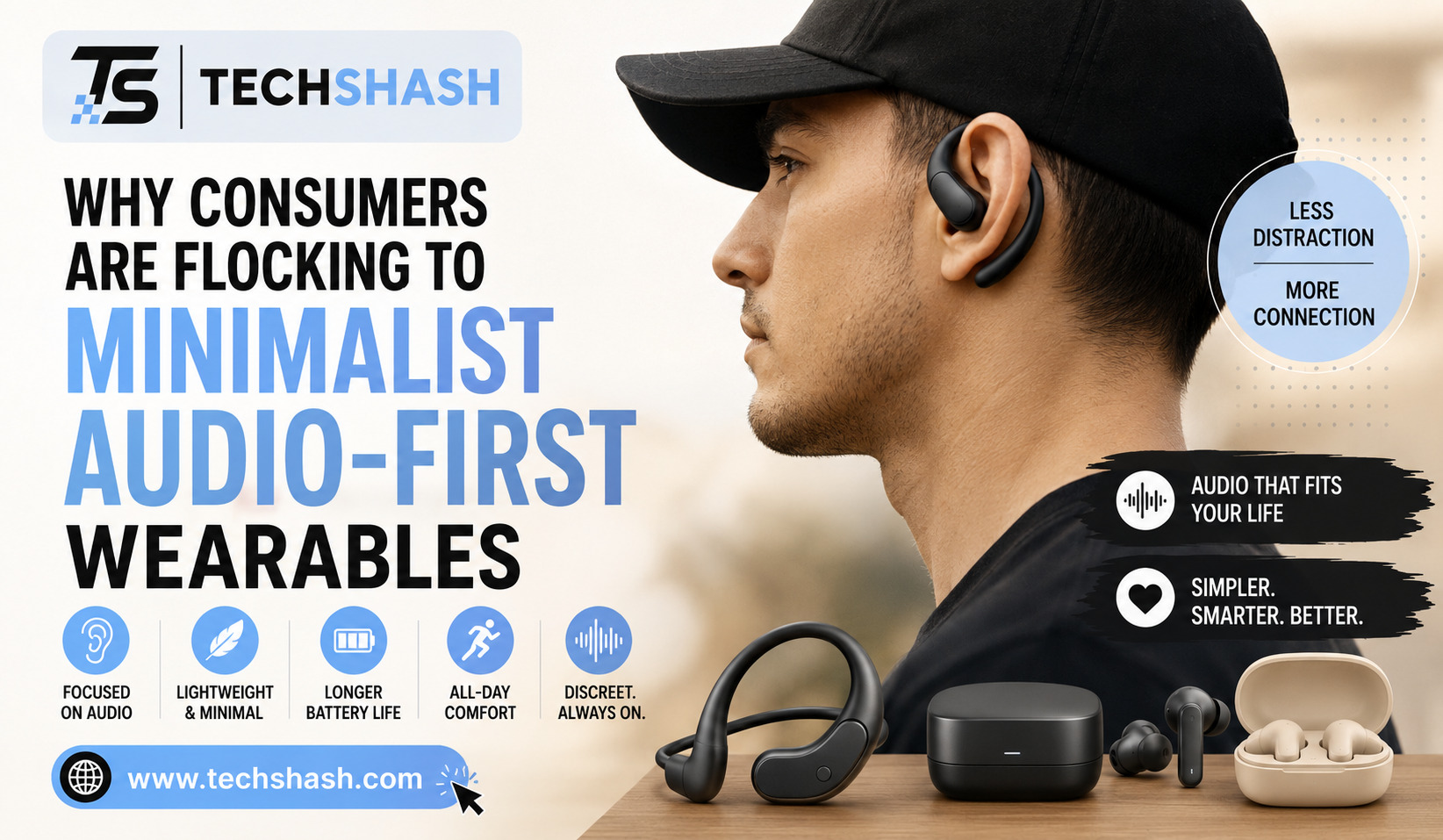
An audio-first wearable is built around sound as the primary interface, not a secondary feature bolted onto a screen. No display, no notifications competing for your eyes, just audio delivered directly and, in many newer designs, without sealing off your ear canal entirely.
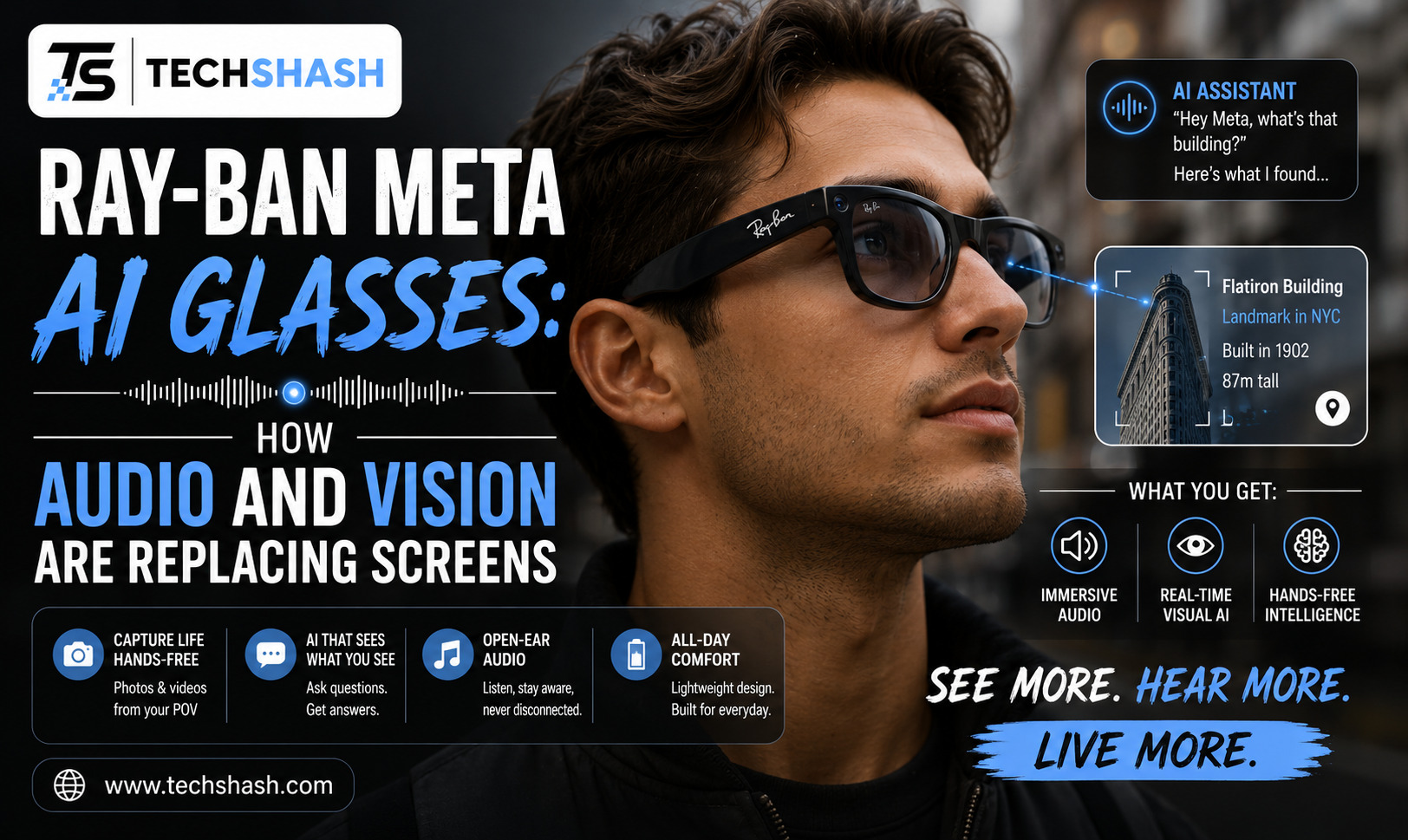
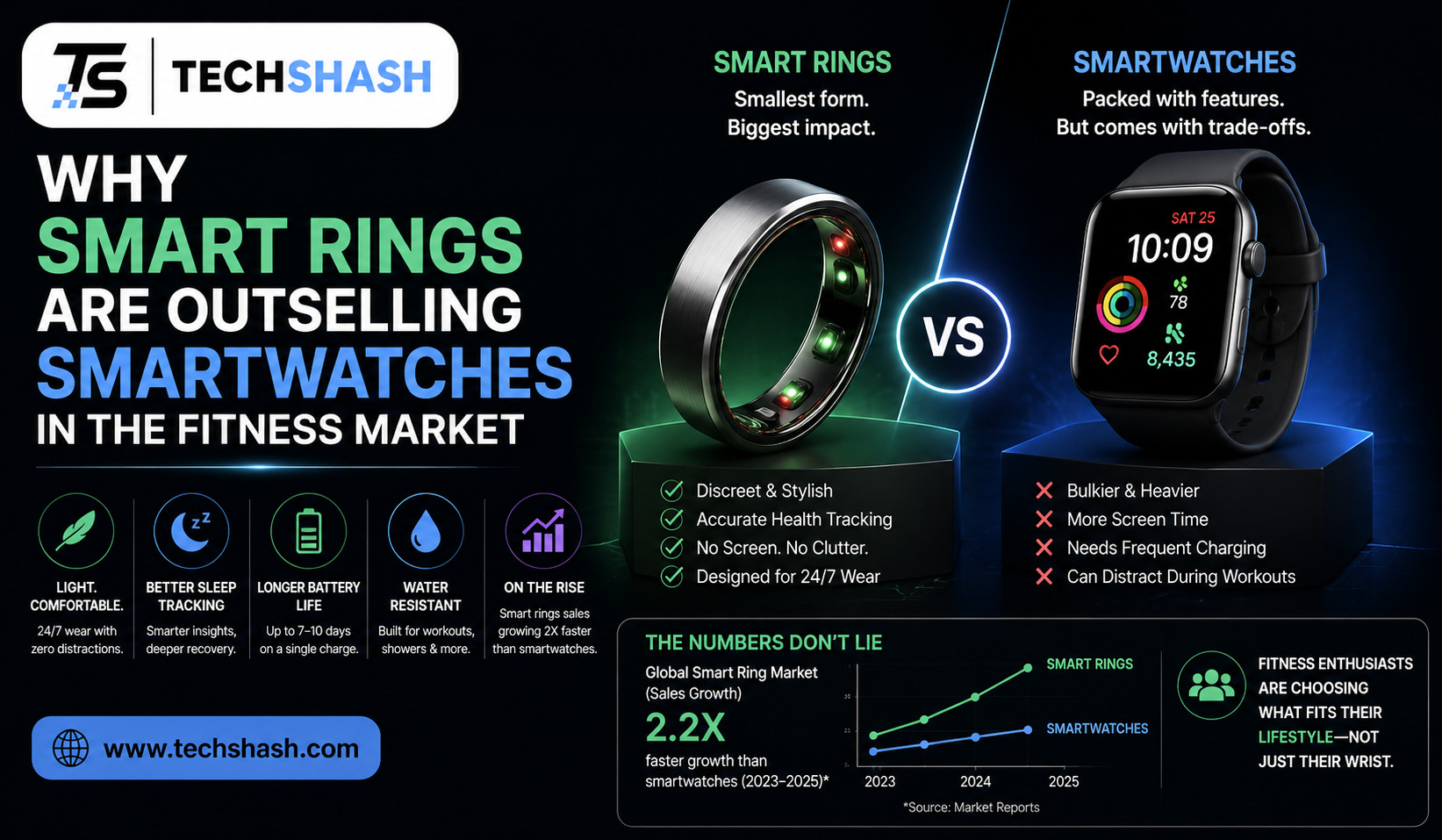
This is a deliberate contrast to smartwatches and AI glasses, both of which layer audio on top of a visual or camera-based experience. Audio-first devices strip that away, betting that sound alone is enough for most everyday interactions.
The category includes bone conduction headphones, air conduction earbuds that sit near but not inside the ear, and clip-style designs that hook onto the outer ear entirely.
2. The Shift Away From In-Ear Designs
Traditional in-ear earbuds still dominate total sales, but the growth story in 2026 belongs almost entirely to open-ear alternatives. Reviewers and manufacturers alike describe open-ear as the fastest-growing and most hotly contested segment in the entire audio market right now.
Part of the appeal is comfort over long stretches of wear. Sealed earbuds can feel fatiguing after hours of use, while open designs rest against or near the ear without creating pressure or a vacuum seal.
Environmental awareness is the other major driver. Runners, cyclists, commuters, and office workers increasingly want to hear their surroundings, whether that means traffic, a colleague, or simply not feeling cut off from the room around them.
3. Why Open-Ear Suddenly Became the Fastest-Growing Category
Sound quality used to be the biggest weakness of open-ear designs, and that gap has closed dramatically. Newer air conduction models use miniaturized speakers positioned close to, but not inside, the ear canal, projecting sound similarly to how you would hear a nearby speaker.
That approach has become something of a sweet spot. It delivers a fuller, more natural audio profile while keeping the core benefit that drew people to open-ear designs in the first place: staying aware of what is happening around you.
Battery life has improved alongside sound quality. Several current models now offer well over 50 hours of total playtime between the earbuds and their charging case, making all-day wear a realistic expectation rather than a marketing claim.
4. The Big Brands Betting on This Trend
A wide range of companies have jumped into open-ear audio, and the competition has pushed quality up quickly across the board.
- Shokz: One of the earlier bone conduction pioneers, now a familiar name among runners and cyclists who prioritize awareness over isolation.
- Bose: Brought premium sound and build quality to the category with its Ultra Open line, priced at the higher end of the market.
- Sony: Entered with clip-on designs like the LinkBuds Clip, offering tap controls and app-based sound customization.
- Nothing: Applied its signature transparent, minimalist design language to open-ear earbuds at a lower price point than Shokz or Bose.
- JBL: Expanded aggressively into the category at CES 2026, launching multiple open-fit models including its first clip-style earbuds.
This kind of broad, simultaneous investment from major brands is usually a strong signal that a product category has moved from experimental to mainstream.
5. Design Choices That Define the Category
A few design patterns show up again and again across the best current models.
Ear hooks and clips
Many designs now rely on a flexible hook or clip that rests around or on the outer ear, rather than anything that pushes into the canal. This keeps the earbud secure during workouts without needing a tight in-ear seal.
Hybrid and dual-form devices
Some newer models let users physically adjust the earbud between a more open, aware setting and a more isolated, sealed setting, depending on the moment. Rather than forcing a single choice, the device adapts to the situation.
Water and dust resistance
Because many of these devices target active use, ratings like IP67 have become increasingly common, protecting against sweat, rain, and dust during workouts or commutes.
6. What You Gain by Going Open-Ear
The core benefits of an audio-first, open-ear wearable come down to comfort and awareness, but the practical list runs a bit longer than that.
- All-day comfort, since nothing seals against or presses into the ear canal for hours at a time.
- Situational awareness, useful for runners near traffic, parents keeping an ear out for kids, or anyone who does not want to feel isolated in public.
- Fewer AI-driven distractions, since these devices generally skip screens and heavy visual notification systems entirely.
- Long battery life, with many current models comfortably lasting a full day or more between charges.
7. What You Give Up
Open-ear audio is not without real compromises, and it is worth being upfront about them before buying.
Bass response remains the most common criticism. Sealed, in-ear designs still generally deliver deeper, more isolated bass than open-ear alternatives, since a sealed fit naturally reinforces low frequencies in a way an open design cannot fully replicate.
Noise isolation is another tradeoff by design, not a flaw. If your goal is blocking out a noisy commute or a loud office, an audio-first open-ear device will not compete with a sealed pair of active noise-cancelling earbuds.
Some designs also draw criticism for looking more conspicuous than a traditional earbud, since drivers or clips often sit visibly outside the ear rather than tucked away and hidden.
8. Choosing the Right Audio-First Wearable
If your priority is workouts and outdoor activity, a secure ear-hook design built specifically for movement, like a sports-focused open-ear model, will likely serve you better than a general clip-on style.
If sound quality and everyday listening matter most, premium options from Bose or Sony tend to lead the pack, though they come at a noticeably higher price than budget-friendly entries from brands like Nothing or Baseus.
If price is the deciding factor, newer budget open-ear models have closed much of the sound-quality gap that used to separate cheap and premium options, making this a much safer category to buy into at a lower price point than it was even a year or two ago.
Key Takeaways
- What it is: Audio-first wearables prioritize sound over screens, often using open-ear designs that do not seal the ear canal.
- Why it is growing: Comfort during long wear and situational awareness are the two biggest reasons buyers are switching from traditional in-ear earbuds.
- Sound quality: Air conduction technology has closed much of the gap with sealed earbuds, delivering fuller audio while staying open.
- Big tradeoff: Bass response and noise isolation remain weaker than sealed, in-ear alternatives.
- Market signal: Major brands including Bose, Sony, JBL, Shokz, and Nothing have all launched competing open-ear models.
FAQs
What is the main difference between open-ear and traditional earbuds? Open-ear designs sit near or around the ear without sealing the ear canal, while traditional earbuds create a sealed fit inside the ear.
Do open-ear earbuds sound as good as sealed earbuds? Sound quality has improved significantly, though sealed earbuds still generally offer stronger bass response and better noise isolation.
Are open-ear earbuds good for workouts? Yes, many models are specifically designed for exercise, offering secure hooks or clips along with sweat and water resistance.
Why are open-ear earbuds becoming so popular? Comfort during extended wear and the ability to stay aware of surrounding sounds are the two biggest reasons buyers are choosing open-ear designs.
Which brands make the best open-ear earbuds? Bose, Sony, Shokz, Nothing, and JBL all currently offer well-reviewed open-ear models spanning a range of price points.
Conclusion
Audio-first wearables have grown from a niche fitness accessory into one of the fastest-growing categories in consumer audio, driven by genuine improvements in sound quality alongside the comfort and awareness that sealed earbuds cannot match. They are not a replacement for every listening situation, since bass depth and noise isolation still favor traditional designs, but for anyone who wants all-day comfort without losing touch with the world around them, minimalist audio-first wearables have earned their growing popularity.