Introduction
For years, the smartwatch was the default answer to wearable health tracking. That default is cracking, at least once the sun goes down. Smart rings for sleep tracking have carved out a growing lead over wrist-worn devices, and the reasons come down to something surprisingly simple: comfort, consistency, and how those two things affect the quality of the data collected overnight. This article looks at why rings are pulling ahead in the bedroom specifically, and where smartwatches still hold their ground.
1. The Shift Nobody Saw Coming
Smartwatches built their reputation on real-time feedback, notifications, and workout tracking, all things that matter during the day. Sleep tracking was often treated as a secondary feature bolted onto a device designed for waking hours.
Smart rings flipped that priority. Built from the start around passive, continuous monitoring rather than screens and alerts, rings turned out to be naturally suited to a job smartwatches were never really optimized for: sitting still on a body all night without getting in the way.
2. Why Comfort Changes the Data
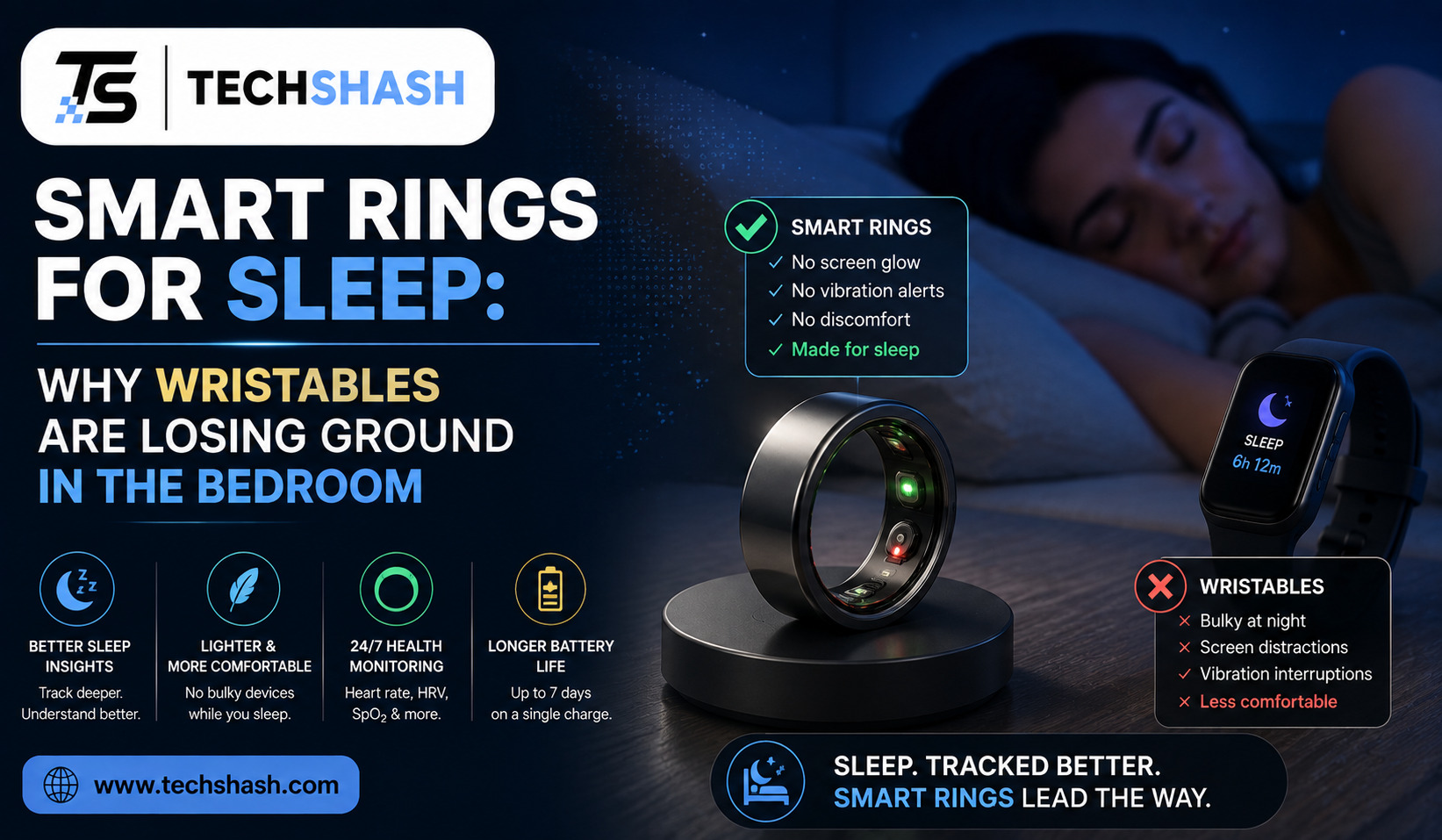
The core advantage is almost embarrassingly simple. A full watch face pressed against the wrist can feel intrusive after a few hours, and many people either take their watch off before bed or wear it inconsistently through the night. A lightweight ring, by contrast, sits quietly on a finger and mostly disappears from awareness once someone falls asleep.
That comfort difference translates directly into better data. Consistent nighttime wear is essential for accurate sleep tracking, and compliance is significantly higher with rings than with watches. A device that only gets worn some nights, or gets removed halfway through the night, produces gaps and inconsistencies that limit how useful its data can be over time.
3. What the Research Actually Shows
The comfort advantage is not just a feel-good story. It shows up in actual performance data too. A study published in the journal Sensors comparing multiple wearables found the Oura Ring more accurate at estimating periods of wake, light sleep, deep sleep, and REM sleep than other wearables tested, including the Fitbit Sense and Apple Watch.
Part of this accuracy gain comes down to sensor physics rather than software alone. A ring maintains constant skin contact on the finger, a body part with strong blood flow close to the surface, which tends to produce more stable heart rate and heart rate variability readings than a watch loosely resting against the wrist. That stability matters most exactly when someone is asleep and their body is relatively still, which is when a ring’s sensor placement advantage shows up most clearly.
4. The Battery Habit That Changes Everything
Charging habits quietly shape how consistently a device gets worn, and this is another area where rings pull ahead for overnight use. A smart ring typically needs charging only occasionally, sometimes just once every four to seven days depending on the model. A smartwatch, especially one running workouts, cellular connectivity, or an always-on display, often needs charging closer to daily.
That difference matters most at night. A smartwatch charging on a nightstand is a smartwatch not collecting sleep data. A ring’s longer battery life means it is far less likely to be dead or charging during the exact hours its data matters most.
5. Where Smart Rings Are Winning the Market
The sales numbers back up the trend. Oura, the best-known name in the category, has sold more than 5.5 million rings since the product launched in 2015, with over half of those sales coming in roughly the past two years. The company reported revenue exceeding $500 million in 2024, more than double the prior year, and has raised a new funding round valuing the company at close to $11 billion.
Oura’s dominance is not accidental. The company held roughly 80 percent of the smart ring market in 2023, according to industry research, built largely on its reputation for sleep-tracking accuracy. Competition has grown since then, with options including the RingConn Gen 2, known for offering longer battery life at a lower price point, and the Samsung Galaxy Ring, which integrates closely with the broader Galaxy ecosystem without requiring a subscription.
6. What Smartwatches Still Do Better
None of this means smartwatches are being pushed out of the picture entirely. They remain the stronger choice for anything involving real-time interaction. A watch can tap a wrist the moment stress spikes during the day, something a screenless ring simply cannot do.
Smartwatches also generally offer:
- Built-in GPS for tracking outdoor runs, rides, or hikes
- Real-time coaching and feedback during active workouts
- A display for checking notifications, messages, and metrics on the spot
- Broader integration with phone calls and apps throughout the day
For anyone whose priority is active performance tracking rather than passive recovery monitoring, a smartwatch still does the job a ring cannot.
7. Picking Sides Based on What You Actually Need
The honest answer to the ring-versus-watch question depends entirely on what someone actually plans to use the data for.
- Choose a smart ring if sleep optimization, recovery tracking, HRV trends, and long-term passive health awareness are the priority, and real-time workout metrics or GPS are not a requirement.
- Choose a smartwatch if GPS-enabled workouts, real-time alerts, a display, and comprehensive phone integration matter more than discreet 24/7 wear.
Neither device is objectively better across the board. They are built around different use cases, and the right pick comes down to which features someone will actually rely on day to day.
8. The Honest Limits of Ring Data
It is worth being clear-eyed about what a smart ring actually delivers. Independent testing shows a consistent pattern: rings are very reliable for tracking trends over time, but they are not medical-grade devices, and a readiness score or sleep stage estimate should not be treated as a clinical diagnosis.
Ring makers themselves increasingly frame their products this way too, describing the value less around any single night’s reading and more around longitudinal trends built from months of consistent wear. That framing matches what the comfort and compliance advantages actually deliver: not perfect precision, but more consistent data collected over more nights than a bulkier device is likely to gather.
Key Takeaways
- The core advantage: Rings are more comfortable overnight, leading to higher compliance and more consistent sleep data.
- Sensor edge: Constant finger skin contact tends to produce more stable heart rate and HRV readings than a loosely worn watch.
- Research support: A published study found the Oura Ring more accurate at sleep staging than the Fitbit Sense and Apple Watch.
- Battery behavior: Rings need charging far less often, reducing the chance a device is dead exactly when sleep data matters most.
- Market reality: Oura has sold over 5.5 million rings and holds a dominant share of the category, with newer competitors like RingConn and the Samsung Galaxy Ring expanding options.
- Important caveat: Smart rings are reliable for trends but are not medical-grade diagnostic devices.
FAQs
Are smart rings more accurate than smartwatches for sleep tracking? Research and independent testing generally show smart rings performing better at sleep staging accuracy, largely due to more consistent overnight wear and stable sensor contact.
Why is compliance so important for sleep tracking accuracy? A device only produces useful data on nights it is actually worn, and rings see higher consistent nightly wear than bulkier watches.
Do smart rings replace smartwatches entirely? No, smartwatches remain stronger for real-time alerts, GPS-based workouts, and active performance feedback during exercise.
Is Oura Ring data medical-grade? No, smart rings are reliable for tracking trends over time but are not considered medical-grade diagnostic devices.
Which brands lead the smart ring market in 2026? Oura remains the dominant name, with RingConn and the Samsung Galaxy Ring among the notable competitors expanding the category.
Conclusion
Smart rings have taken a real lead over wristables specifically in the bedroom, and the reason is less about flashy sensor upgrades than about something simple: people actually keep them on all night. That consistency, paired with the sensor stability of constant skin contact, has translated into measurably better sleep-tracking performance in independent research. Smartwatches are not going anywhere, and they still win for daytime interaction and active workouts, but when it comes to what happens after the lights go off, rings have quietly become the wearable most worth trusting.