Introduction
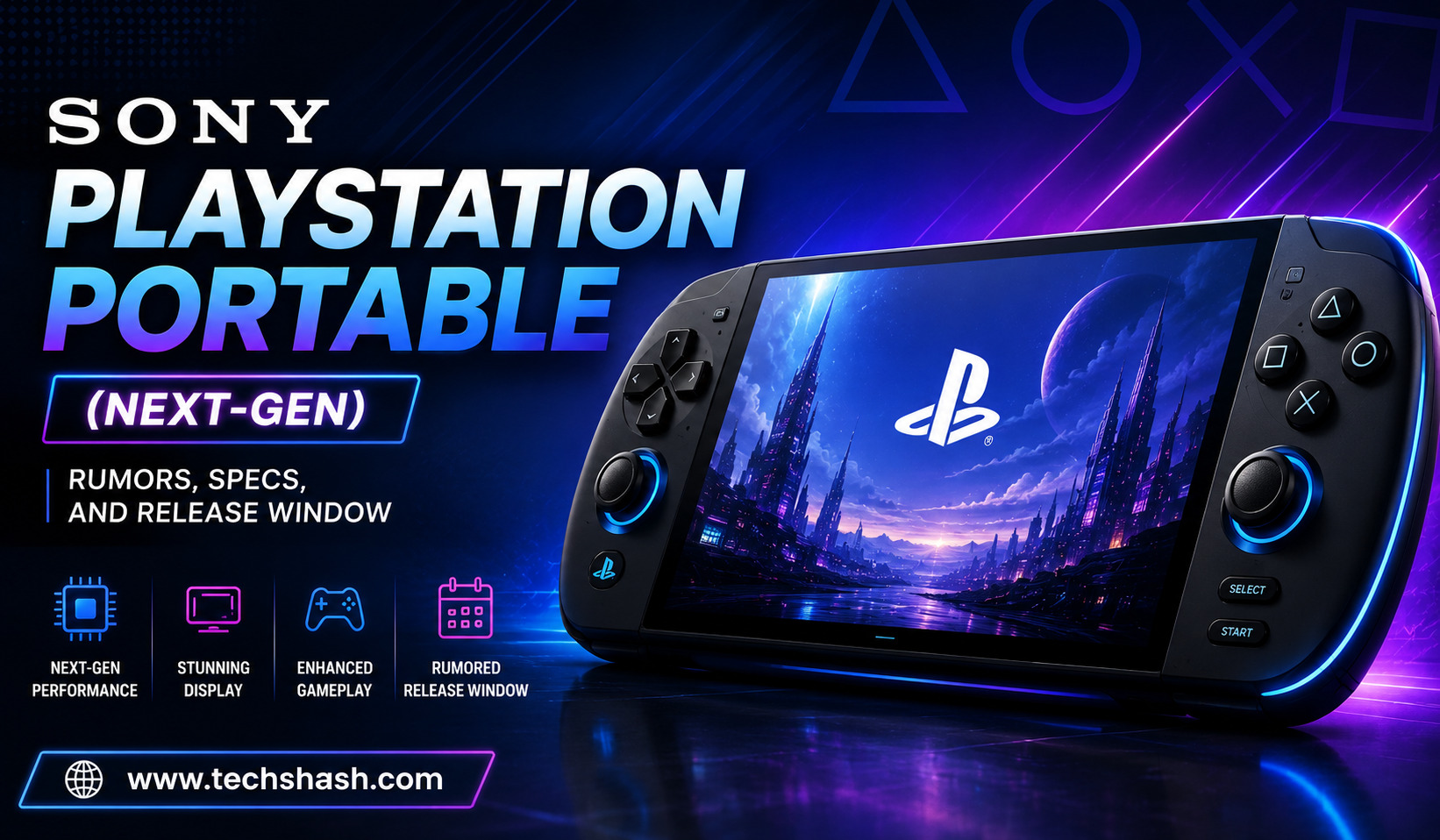
Sony has not confirmed a next-generation PlayStation handheld. Even so, leaks about a Sony PlayStation Portable follow-up have piled up for more than a year, pointing to real hardware with a real codename. This guide pulls together what supply chain leakers, hardware insiders, and reporters currently claim about specs, release timing, and how the device fits into Sony’s next console generation.
Is Sony Really Building a New PlayStation Handheld
The short answer is that most signs point to yes. Bloomberg first reported Sony’s interest in a gaming handheld back in 2024, using the internal codename Project Canis. Since then, hardware leaker KeplerL2 and YouTuber Moore’s Law Is Dead have both added technical detail that lines up with the original report.
This would mark Sony’s first standalone gaming handheld since the PS Vita, which struggled commercially after its 2011 launch. The current handheld, PlayStation Portal, only streams games from a PS5 and cannot run titles on its own. The next device is described as a true standalone console with its own chip and memory.
Release Date: When Could It Actually Launch
Timing has moved around a lot in reporting throughout 2026. Sony has historically kept close to a seven-year console cycle, which would point to 2027 for the PS6 generation. Some reports from early 2026 suggested Sony was even accelerating that timeline.
Other reports tell a different story. Rising RAM prices and broader chip shortages, driven partly by AI hardware demand, have reportedly pushed some insiders toward a 2028 or 2029 window instead. As of mid-2026, Sony has not teased the device, named it publicly, or confirmed any date.
A smaller, separate rumor claims Sony may also refresh the existing PlayStation Portal with an improved OLED screen sometime in 2026. That device is a different product from the rumored standalone handheld and should not be confused with it.
The Chip Inside: Zen 6 and RDNA 5
Leaked specifications describe a custom AMD chip built around Zen 6 CPU cores paired with an RDNA 5 GPU. Reported configurations mention four Zen 6 cores plus two additional low-power cores for battery efficiency, alongside 16 RDNA 5 compute units.
For comparison, that would put the handheld well above the Steam Deck, which runs just 8 RDNA2 compute units. Reported clock speeds sit around 1.20GHz in handheld mode and up to 1.65GHz when docked, suggesting a similar docking concept to the current Switch.
Backward Compatibility
Several reports mention backward compatibility as a planned feature, allowing the handheld to run games built for earlier PlayStation generations. Nothing has been confirmed about which generations that compatibility would cover.
Memory and Storage Leaks
Memory numbers vary depending on the source, which is normal this early in the leak cycle. One report from KeplerL2 describes LPDDR5X memory on a 192-bit controller, with theoretical support for up to 48GB, though no confirmed figure exists yet.
Other rumors mention expandable storage as a planned feature, which would set the handheld apart from the current PS5, which uses a proprietary expansion slot. Haptic feedback is also mentioned as a carryover feature from the DualSense controller line.
Display, Design, and Backward Compatibility
Detailed display specifications have not leaked yet. What has surfaced points to a design philosophy closer to the Nintendo Switch 2 or Steam Deck than the original PS Vita, with a focus on docking into a TV setup rather than staying purely handheld.
Sony’s broader strategy appears aimed at building a fuller hardware lineup. Reports describe growing consumer interest in handheld gaming, based on search and shopping trend data, as one reason Sony is investing in the category again.
How It Compares to the PS6 Home Console
The rumored handheld is expected to launch alongside, or close to, the PS6 home console rather than as a separate generation. The home console is rumored to use the same RDNA 5 and Zen 6 architecture family, scaled up, with up to 30GB of GDDR7 memory compared to the PS5’s 16GB of GDDR6.
Performance estimates for the home console suggest roughly three times the rasterization power of the PS5, along with a much larger jump in ray-tracing performance. The handheld would sit well below that ceiling, similar to how the Switch 2 trades power for portability against a home console.
Should You Wait for Sony’s Next Handheld
If you already own a Steam Deck, ROG Ally, or Switch 2, there is no rush. Sony has not confirmed pricing, a release date, or even the device’s existence, and current reporting suggests a launch somewhere between 2027 and 2029.
If you are mainly interested in streaming PS5 games rather than running them locally, the existing PlayStation Portal already covers that need today, with a possible OLED refresh reportedly coming later in 2026.
Key Takeaways
- Status: Unconfirmed by Sony; based on leaks tied to the codename Project Canis.
- Release window: Most reports point to 2027, though some suggest 2028 or 2029 due to chip and memory costs.
- Chip: Custom AMD silicon with Zen 6 CPU cores and 16 RDNA 5 compute units.
- Memory: LPDDR5X on a 192-bit bus, with theoretical support up to 48GB.
- Related product: A separate PlayStation Portal OLED refresh may arrive sooner, in 2026.
- Positioning: Expected to launch near the PS6 home console rather than years apart.
Frequently Asked Questions
Has Sony officially confirmed a new PlayStation handheld?
No, Sony has not confirmed the device, its name, or a release date.
What is Project Canis?
Project Canis is the internal codename Bloomberg reported for Sony’s rumored standalone gaming handheld.
When might the new PlayStation handheld launch?
Current leaks point to a window between 2027 and 2029, tied closely to the PS6 home console timeline.
Is this the same as the PlayStation Portal?
No, the current PlayStation Portal only streams games from a PS5, while the rumored device would run games on its own hardware.
What chip will the new handheld use?
Leaks describe a custom AMD chip combining Zen 6 CPU cores with an RDNA 5 GPU.
Conclusion
A next-generation Sony PlayStation Portable remains unconfirmed, but the volume and consistency of leaks around Project Canis suggest real hardware is in development. Zen 6 CPU cores, an RDNA 5 GPU, and expandable storage would put it well ahead of Sony’s last handheld attempt. Until Sony holds an official reveal, treat every date and spec here as a leak rather than a promise.