People across the globe are quietly rethinking how domestic chores shape daily routines. Autonomous home robots have emerged as powerful contenders that challenge the necessity of manual cleaning and repetitive physical labor in modern living spaces. Families want cleaner floors and organized rooms without spending precious weekend hours scrubbing surfaces or folding laundry. This article will examine why these innovative robotic systems are quickly becoming the preferred choice for modern household assistance.
1. Understanding Modern Autonomous Home Robotics
Traditional cleaning gadgets required constant human supervision and manual guidance to complete simple chores. Autonomous robotic technology changes this dynamic completely by using advanced artificial intelligence engines and sophisticated sensor arrays.
How Machine Learning Powers Movement
Engineers designed these machines to map interior floor plans and learn household layouts over time. Sensors fire infrared beams and ultrasonic waves outward to detect furniture legs and stray toys instantly. Advanced spatial mapping algorithms calculate safe paths to ensure the device never gets stuck under a low couch or tumbles down a flight of stairs.
Eliminating Manual Operation
Older automated vacuums suffered whenever furniture was rearranged or clutter blocked their cleaning paths. Placing powerful processing chips right inside the robotic chassis prevents the unit from losing its orientation. Autonomous navigation capability ceases to be a luxury and becomes a reliable daily asset.
2. Evolution of Navigation and Spatial Mapping
Living room design trends favor clean lines, minimalist furniture, and open floor layouts. Bulky cleaning buckets and tangled cords often clash with contemporary interior styles.
Minimalist Charging Docks
An autonomous cleaning unit rests quietly on a low profile docking station tucked away in a corner. You do not need to haul heavy equipment out of storage closets or navigate messy power cables across hallways. Spatial navigation precision improves dramatically when intelligent machines calculate the most efficient cleaning routes on their own.
Blending Into Room Decor
Modern manufacturers build these robotic chassis in neutral colors, smooth matte plastics, and sleek metallic finishes that complement modern furniture. When powered down, the device looks like an ordinary piece of high end home decor rather than a complex computer on wheels. Discreet visual integration keeps your living room looking peaceful and uncluttered.
3. Everyday Tasks Handled by Smart Machines
Consumers crave freedom from monotonous daily chores that drain time and energy after long work shifts. Standard appliances require human hands to operate, empty, and reset for every single cycle.
Scaling Up to Full Home Care
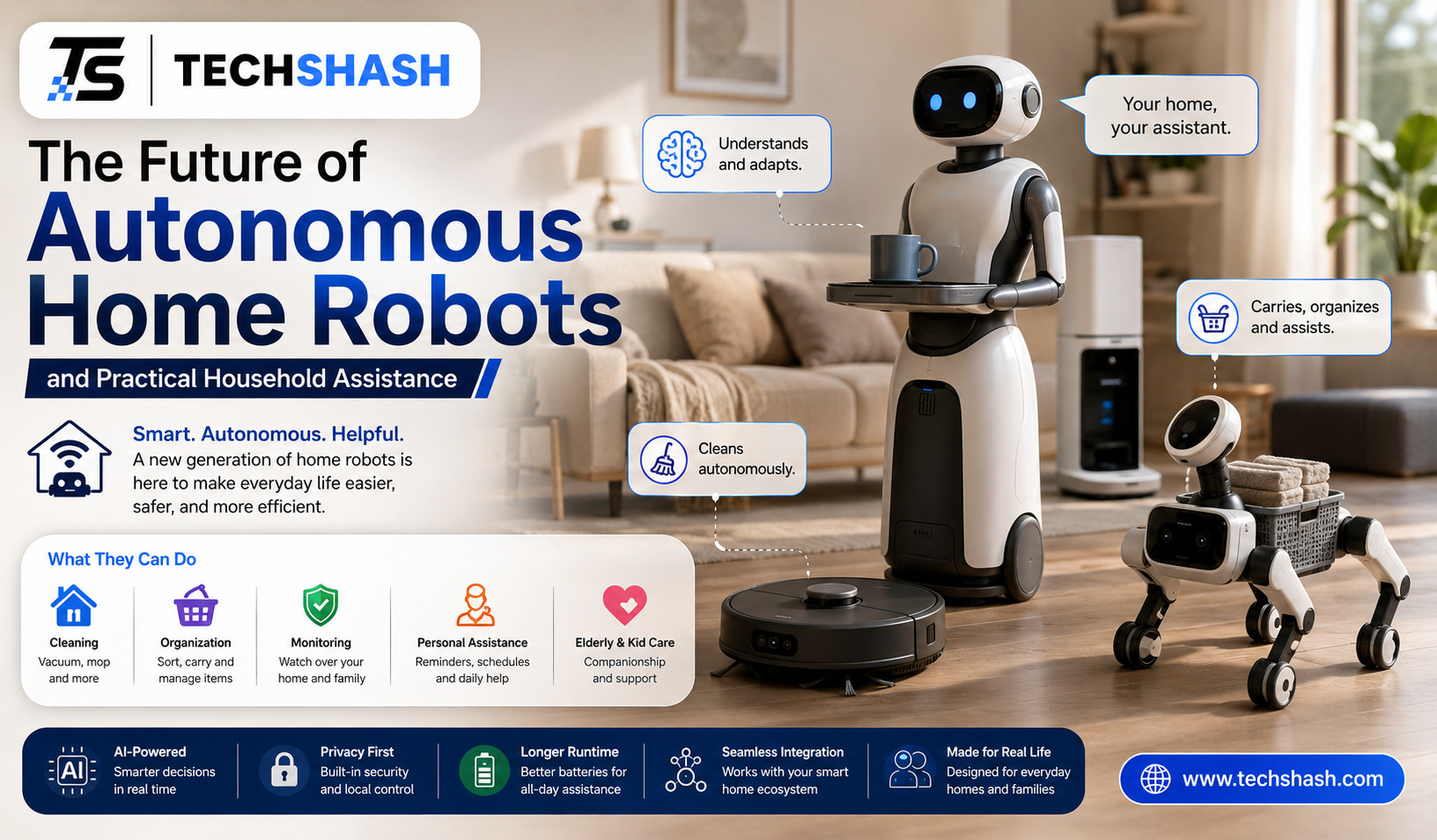
Robots deliver multifaceted utility ranging from deep floor vacuuming to precise surface sanitization with absolute ease. You get spotless floors without paying exorbitant prices for specialized commercial cleaning services. Practical household assistance transforms ordinary weekday evenings into relaxing personal time.
Flexible Cleaning Schedules
Adjusting the operating boundary takes seconds using a smartphone application and digital room zoning tools. You can restrict the machine from entering fragile areas or command it to target specific high traffic zones immediately. Customizable task scheduling adapts effortlessly to whatever daily routines you choose to maintain.
4. Human and Robot Collaboration in Domestic Spaces
Staring at chaotic rooms or disorganized living areas can cause noticeable stress and mental fatigue during busy weeks. Robotic assistance offers a fundamentally different living experience for modern households.
Autonomous Support vs Manual Labor
Televisions and basic appliances demand direct human inputs for every single action. Intelligent helpers observe room conditions and initiate cleaning protocols before you even notice dust accumulating on the floorboards. Proactive mechanical support reduces daily fatigue and lowers physical strain during hectic work weeks.
Reduced Domestic Friction
Sharing household chores often creates arguments among family members living under the same roof. Delegating repetitive tasks to a reliable machine removes friction and restores harmony. Balanced chore distribution helps protect family peace over extended months.
5. Privacy, Security, and Data Protection Concerns
Evaluating the safety aspect of purchasing an internet connected device requires looking beyond the initial convenience factor. Camera privacy and data storage policies play a vital role in long term ownership satisfaction.
Secure Local Processing
Traditional smart devices uploaded every camera frame to remote servers for cloud processing. Modern solid state processors handle data locally on the device to prevent unauthorized video leaks or cyber intrusions. Enhanced local data privacy ensures years of secure daily operation without compromising household confidentiality.
Value of Transparency
Calculating trust relative to manufacturer security protocols reveals strict regulatory standards for modern robotics companies. Buying a budget device requires careful research, whereas established brands deliver rigorous encryption for peace of mind. Robust cybersecurity measures make intelligent home automation safe for everyday families.
6. Affordability and Accessibility for Average Families
Financial considerations play a massive role in whether cutting edge technology actually reaches mainstream households or remains an expensive novelty. Component manufacturing costs have steadily decreased over the past decade.
Mass Production Advantages
Early robotic cleaners cost small fortunes and broke down frequently due to fragile mechanical parts. Modern manufacturing techniques produce durable electric motors and precise sensors at a fraction of their historical cost. Lower hardware production costs ensure widespread adoption across diverse economic brackets.
Long Term Utility Value
Calculating cost relative to saved hours reveals surprising economic benefits for autonomous home systems. Purchasing a capable cleaning robot requires an upfront financial investment, whereas daily automated labor saves hundreds of hours of manual work over its operational lifespan. Superior time saving value makes advanced household assistance accessible to more families.
Key Takeaways
- Autonomous navigation: Advanced spatial mapping algorithms allow machines to clean efficiently without human supervision.
- Proactive support: Proactive mechanical support reduces daily fatigue and handles routine chores automatically.
- Data security: Enhanced local data privacy protects household confidentiality through secure on device processing.
- Affordability: Lower hardware production costs make intelligent home assistance accessible to average families.
- Time efficiency: Superior time saving value frees up valuable hours during busy work weeks.
FAQs
Do autonomous home robots require a permanent internet connection to function properly?
Modern units navigate using local sensor arrays, but internet access is helpful for software updates and remote smartphone controls.
Can these intelligent machines handle thick carpets and uneven flooring transitions smoothly?
Powerful drive wheels and adjustable suction power allow autonomous robots to transition seamlessly between hardwood floors and thick area rugs.
How loud are the vacuum motors and mechanical drives during normal cleaning cycles?
Engineers utilize quiet brushless motors and sound dampening materials to keep operating noise below standard conversational levels.
Is it difficult to set up cleaning boundaries and restricted zones in the mobile application?
Virtual walls and restricted zones can be drawn onto your smartphone floor plan within a few simple taps.
Do these robotic systems require frequent manual maintenance from the user?
Dustbins and charging contacts require occasional cleaning, but most advanced docks feature self emptying capabilities that last for weeks.
Conclusion
The shift toward autonomous home robots highlights a growing desire for flexible, time saving, and deeply practical domestic solutions. By combining intelligent navigation with reliable mechanical assistance, these systems successfully redefine what a modern household can achieve.